Tuesday, December 23, 2025
ADVT 
Health

Brain may produce nerve cells even after stroke

Darpan News Desk IANS, 12 Oct, 2014 11:13 AM
    Scientists have discovered a previously unknown mechanism through which the brain produces new nerve cells even after a stroke.
     
    Following an induced stroke in mice, brain support cells called astrocytes started to form nerve cells in the injured part of the brain.
     
    Using genetic methods to map the fate of the cells, the scientists demonstrated that astrocytes in the area formed immature nerve cells which then developed into mature nerve cells.
     
    "This is the first time that astrocytes have been shown to have the capacity to start a process that leads to the generation of new nerve cells after a stroke," said Zaal Kokaia, professor of experimental medical research at the Lund University in Sweden.
     
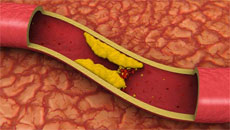
    A stroke is caused by a blood clot blocking a blood vessel in the brain, which leads to an interruption of blood flow and therefore a shortage of oxygen. 
     
    Many nerve cells die, resulting in motor, sensory and cognitive problems.
     
    During the study, scientists also identified the signalling mechanism that regulates the conversion of the astrocytes to nerve cells.
     
    In a healthy brain, this signalling mechanism is active and inhibits the conversion, and, consequently, the astrocytes do not generate nerve cells.
     
    Following a stroke, the signalling mechanism is suppressed and astrocytes start the process of generating new cells.
     
    "Interestingly, even when we blocked the signalling mechanism in mice not subjected to a stroke, the astrocytes formed new nerve cells," Kokaia added.
     
    "One of the major tasks now is to explore whether astrocytes are also converted to neurons in the human brain following damage or disease," said Olle Lindvall, senior professor of neurology at the Karolinska Institute in Sweden.
     
    The findings were published in the journal Science.

    MORE Health ARTICLES

    Autism, an individual disorder

    Autism, an individual disorder
    The International Centre for Neurological Restoration (CIREN) here is developing a project aimed at validating and measuring the effectiveness of interventions in patients with autism spectrum disorders (ASD).

    Autism, an individual disorder

    Diet drinks spell heart trouble in older women

    Diet drinks spell heart trouble in older women
    Have you switched to diet drinks to minimise calorie consumption as you age? Think twice as according to an Indian-American researcher, healthy older women who drink two or more diet drinks a day may be more likely to have a heart attack, stroke or other cardiovascular problems.

    Diet drinks spell heart trouble in older women

    Revealed: Why cholesterol worsens in winter

    Revealed: Why cholesterol worsens in winter
    Cholesterol levels usually go up in colder months - a trend that may be driven by behavioural changes that occur with the changing seasons, new research by an Indian American researcher shows.

    Revealed: Why cholesterol worsens in winter

    A Yawn for a Yawn kindles love for sure!

    A Yawn for a Yawn kindles love for sure!
    Does your hubby yawn a lot? This may be his way of expressing love for you but you need to yawn back to confirm that you miss him too!

    A Yawn for a Yawn kindles love for sure!

    Beware! Kittens can transmit TB bacteria

    Beware! Kittens can transmit TB bacteria
    In a first-ever incident of a feline-human disease transmission, cats have passed tuberculosis (TB) to two people in Britain.

    Beware! Kittens can transmit TB bacteria