Tuesday, December 23, 2025
ADVT 
Health

Brain may produce nerve cells even after stroke

Darpan News Desk IANS, 12 Oct, 2014 11:13 AM
    Scientists have discovered a previously unknown mechanism through which the brain produces new nerve cells even after a stroke.
     
    Following an induced stroke in mice, brain support cells called astrocytes started to form nerve cells in the injured part of the brain.
     
    Using genetic methods to map the fate of the cells, the scientists demonstrated that astrocytes in the area formed immature nerve cells which then developed into mature nerve cells.
     
    "This is the first time that astrocytes have been shown to have the capacity to start a process that leads to the generation of new nerve cells after a stroke," said Zaal Kokaia, professor of experimental medical research at the Lund University in Sweden.
     
    A stroke is caused by a blood clot blocking a blood vessel in the brain, which leads to an interruption of blood flow and therefore a shortage of oxygen. 
     
    Many nerve cells die, resulting in motor, sensory and cognitive problems.
     
    During the study, scientists also identified the signalling mechanism that regulates the conversion of the astrocytes to nerve cells.
     
    In a healthy brain, this signalling mechanism is active and inhibits the conversion, and, consequently, the astrocytes do not generate nerve cells.
     
    Following a stroke, the signalling mechanism is suppressed and astrocytes start the process of generating new cells.
     
    "Interestingly, even when we blocked the signalling mechanism in mice not subjected to a stroke, the astrocytes formed new nerve cells," Kokaia added.
     
    "One of the major tasks now is to explore whether astrocytes are also converted to neurons in the human brain following damage or disease," said Olle Lindvall, senior professor of neurology at the Karolinska Institute in Sweden.
     
    The findings were published in the journal Science.

    MORE Health ARTICLES

    Drinking milk can delay knee problem in women

    Drinking milk can delay knee problem in women
    Women who frequently consume fat-free or low-fat milk may delay the progression of osteoarthritis (OA) of the knee, research indicates.

    Drinking milk can delay knee problem in women

    e-cigarettes next big smoking poison, warns study

    e-cigarettes next big smoking poison, warns study
    The fast spreading e-cigarettes are undoing the anti-smoking efforts of the last three decades, health experts warn. Also, the number of people being poisoned by e-cigarettes in the US has gone up manifold in the last few years, according to official reports.

    e-cigarettes next big smoking poison, warns study

    Tiny robot that performs surgery via belly button!

    Tiny robot that performs surgery via belly button!
    Imagine a tiny robot that can enter your body via small belly button precision, perform surgery and return to its base peacefully.

    Tiny robot that performs surgery via belly button!

    An app to test your eyes anywhere on earth

    An app to test your eyes anywhere on earth
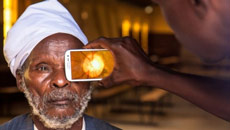
    In a ground-breaking innovation that could help prevent blindness in millions across the world, scientists have developed an app that allows eye tests anywhere.

    An app to test your eyes anywhere on earth

    High temperature reduces length of pregnancy: Study

    High temperature reduces length of pregnancy: Study
    If you are pregnant and wish a full-term delivery, it is better to shift to a colder place before the mercury goes up as high temperature may reduce the length of your pregnancy, research indicates.

    High temperature reduces length of pregnancy: Study

    Astronauts' space odyssey alters their hearts for 'bad'

    Astronauts' space odyssey alters their hearts for 'bad'
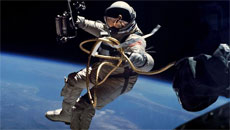
    In an alarming revelation, a new study finds that astronauts' hearts become more spherical when exposed to long periods of microgravity in space -- a change that could lead to cardiac problems when they are back on earth.

    Astronauts' space odyssey alters their hearts for 'bad'