Saturday, June 27, 2026
ADVT 
National

B.C. boosts rebate for electric vehicles

Darpan News Desk The Canadian Press, 03 Aug, 2022 03:45 PM
  • B.C. boosts rebate for electric vehicles

The British Columbia government says it is improving its rebate program for electric vehicles to make them more affordable and accessible. 

A statement from the Ministry of Energy, Mines and Low Carbon Innovation says the maximum provincial rebate for battery-electric, fuel-cell electric and long-range plug-in hybrid electric vehicles climbs from $3,000 to $4,000. 

The maximum rebate for lower-range plug-in hybrid electric vehicles increases to $2,000 from the previous high of $1,500.

The ministry says eligibility for a rebate will be based on income levels, with an individual making up to $80,000, or a household with an income up to $125,000, eligible for the maximum rebate.

As personal or household income climbs, rebate eligibility decreases on a sliding scale until those with a personal income above $100,000 or households with incomes above $165,000 are no longer entitled to the discount.

The statement says 2020 income tax returns show more than 90 per cent of B.C. residents are eligible for an EV rebate and can save as much as $9,000 on the purchase or lease of a new electric vehicle when combined with federal incentives.

The president of the New Car Dealers Association of B.C. says the revised rebates will make zero-emission vehicles more affordable for lower-income individuals.

Blair Qualey says the changes are "positive steps" and his association is anticipating more.

“While we can appreciate that government always faces the difficult position of trying to manage program spending and budgets, we will be watching how changes for higher-income participants may impact (zero-emission vehicle) uptake," Qualey says in a statement.

The price cap to determine eligibility for vehicle rebates in B.C. remains at a maximum of $55,000 for compact and full-sized cars, but the Energy Ministry statement says a second category is being added to support those requiring larger EVs, such as soon-to-arrive minivans, sport utility vehicles and pickup trucks.

 The cap for those vehicles has been set at a maximum retail price of $70,000, the statement says.
MORE National ARTICLES

Minister Duclos steps aside due to illness

Minister Duclos steps aside due to illness
Duclos says in a statement that he felt persistent chest pain over the past several days.

Minister Duclos steps aside due to illness

B.C. farm ban means culling 10 million fish: study

B.C. farm ban means culling 10 million fish: study
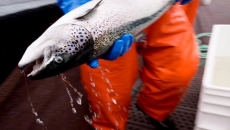
The report by economics firm RIAS Inc. says more than 10.7 million young salmon and eggs will be destroyed over the course of the 18-month phase-out.

B.C. farm ban means culling 10 million fish: study

Teachers at B.C. school protest over COVID safety

Teachers at B.C. school protest over COVID safety
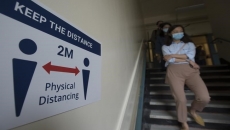
Matt Westphal, the president of the Surrey Teachers Association, says the biggest concern is that students in elementary schools are not required to wear masks inside their classrooms.

Teachers at B.C. school protest over COVID safety

Crown seeks six years for Rideau Hall incident

Crown seeks six years for Rideau Hall incident
Corey Hurren, 46, rammed through a gate at Rideau Hall and headed on foot toward Prime Minister Justin Trudeau’s home at Rideau Cottage while heavily armed on July 2.

Crown seeks six years for Rideau Hall incident

B.C. allows restaurants to buy wholesale liquor

B.C. allows restaurants to buy wholesale liquor
The provincial government made temporary changes last June to allow the hospitality industry to buy alcohol at the same cost as liquor stores and it has now made that decision permanent.

B.C. allows restaurants to buy wholesale liquor

Canada, Australia team up on online regulation

Canada, Australia team up on online regulation
A statement from Ottawa says Prime Minister Justin Trudeau and Australian Prime Minister Scott Morrison have agreed to continue "co-ordinating efforts" to address online harm and ensure social media companies pay for journalism.

Canada, Australia team up on online regulation