
Tuesday, June 16, 2026
ADVT 
National

Bill Morneau leaves as suddenly as he arrived

Darpan News Desk The Canadian Press, 18 Aug, 2020 06:52 PM
  • Bill Morneau leaves as suddenly as he arrived

William Francis Morneau leaves federal politics as suddenly as he burst onto the Ottawa scene less than five years ago.

In November 2015, the newly elected Liberal member for Toronto Centre became the first rookie MP in nearly a century to step into the high-profile and demanding role of finance minister.

He set about implementing pillars of Prime Minister Justin Trudeau's economic platform, including tax cuts for the middle class, the new Canada Child Benefit and a revamped Canada Pension Plan.

Morneau brought ample experience as a business leader and volunteer to the role.

He took the reins of the family business from his father, growing human resources firm Morneau Shepell to 4,000 employees from just 200.

Morneau was also a keen supporter of the arts, and worked to help at-risk youth and ensure better access to health care and education. He also helped found a school for Somali and Sudanese girls at a United Nations High Commissioner for Refugees camp in northern Kenya.

In the rough-and-tumble world of parliamentary politics, the deliberate and thoughtful finance minister was forced to learn fast.

While still honing his political chops, he rarely seemed far from one controversy or another.

It would prompt the opposition to try to paint the wealthy former businessman as out of touch with the realities of ordinary Canadians.

Morneau's first budget projected years of big deficits despite Trudeau's 2015 election promise to keep annual shortfalls under $10 billion.

A contentious tax-reform plan released in 2017 led to an outcry from enraged business owners, doctors, tax experts and even backbenchers within his own Liberal caucus.

"I've learned from this experience that we have to be very good at communicating to Canadians what it is that we're trying to achieve," Morneau said at the time.

There were also questions that year about the minister's personal assets.

The federal ethics commissioner of the day fined Morneau $200 for failing to disclose his role as a director in a private corporation that owns a villa in France. Morneau had disclosed his ownership of the villa to Mary Dawson but, thanks to what his office called an administrative oversight, failed to mention the ownership structure itself.

Criticism intensified when word spread that he hadn't placed his Morneau Shepell holdings into a blind trust after being named to cabinet — a decision Morneau insisted was framed by Dawson's own advice.

In response to the controversy, Morneau sold off the remainder of his Morneau Shepell shares, which were worth about $21 million. He donated to charity the difference between what the shares were worth at the time of the sale and their value in 2015 when he was first elected — estimated at about $5 million — and promised to place his other assets in a blind trust.

In his final months as finance minister, Morneau oversaw massive spending to deal with economic and social fallout from the COVID-19 pandemic.

Morneau and Trudeau are both facing investigations by the new federal ethics watchdog, Mario Dion, for taking part in talks to hand WE Charity a contract to run a pandemic-related student-volunteer program.

One of Morneau's daughters works for the organization, another has spoken at its events and his wife, Nancy McCain, has donated $100,000. Morneau also revealed last month that he had repaid WE some $41,000 in expenses for trips he and his family took in 2017 to view two of its humanitarian projects in Ecuador and Kenya.

In stepping down, the 57-year-old Morneau signalled a need for a new finance minister to take up the challenge of navigating Canada's economy through the shoals of the pandemic.

"I will look forward to watching politics from the outside, and hopefully contributing in another way."
MORE National ARTICLES

Ferries, orchestra retract layoffs, await subsidy

Vancouver Symphony Orchestra and BC Ferries have rescinded lay-off notices in anticipation of receiving the Canadian government's emergency wage subsidies. Both BC Ferries and the symphony had planned layoffs to take effect on the Easter weekend as the COVID-19 pandemic drains away their businesses.

Ferries, orchestra retract layoffs, await subsidy

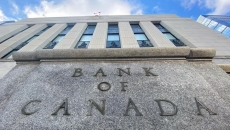
The Bank of Canada announced that it is holding its interest rate target at 0.25 per cent

The Bank of Canada announced that it is holding its interest rate target at 0.25 per cent
The Bank of Canada is warning that the downturn tied to COVID-19 will be the worst on record and that the economic recovery will depend on the effectiveness of current measures to bring the pandemic under control. The bank announced that it is keeping its key interest rate target on hold at 0.25 per cent, saying that it is effectively as low as it can go to combat the economic impacts of COVID-19.

The Bank of Canada announced that it is holding its interest rate target at 0.25 per cent

Liberals ease access to emergency COVID-19 benefit, plan to top-up wages

The federal government is making changes to its COVID-19 programs to send emergency aid to seasonal workers without jobs and those whose hours have been drastically cut but who still have some income. The changes will also allow people who are making up to $1,000 a month to qualify for the Canada Emergency Response Benefit, as well as those whose employment insurance benefits have run out since the start of the calendar year.    

Liberals ease access to emergency COVID-19 benefit, plan to top-up wages

Canada focused on fighting COVID-19 Trudeau steers clear of WHO controversy

Prime Minister Justin Trudeau refused Wednesday to join the escalating global debate about the World Health Organization's handling of the COVID-19 crisis, insisting Canada remains focused on working with experts around the world to combat the pandemic. Trudeau repeatedly batted back questions about Donald Trump's plan to halt funding to the UN agency and review what the U.S. president says was a failure to properly assess the threat posed by the novel coronavirus back in January.

Canada focused on fighting COVID-19 Trudeau steers clear of WHO controversy

With strong control measures, the federal public health agency projects that 11,000 to 22,000 Canadians could die of COVID-19 in the coming months

Canada could see the end of the first wave of the COVID-19 epidemic before autumn, according to federal projections, but only if strong physical distancing measures are strictly maintained the whole time. Even in that best-case scenario, the federal public health agency projects that a total of 4,400 to 44,000 Canadians could die of COVID-19 in the coming months.    

With strong control measures, the federal public health agency projects that 11,000 to 22,000 Canadians could die of COVID-19 in the coming months

Canada lost more than a million jobs in March, but April may be even worse

The Canadian economy lost an unprecedented one million jobs in March — the worst recorded single-month change — as the COVID-19 crisis began to take hold, lifting the unemployment rate to 7.8 per cent, Statistics Canada reported Thursday. The loss is eight times worse than the previous one-month record, yet economists warned it will likely be even worse in April, when the impact of physical distancing practices and other measures became clearer and millions of Canadians began receiving emergency federal aid.

Canada lost more than a million jobs in March, but April may be even worse