Canada will maintain its sanctions on Russia and its shadow fleet of oil transports, despite U.S. President Donald Trump's move to ease sanctions, Prime Minister Mark Carney said on Friday.
The United States placed a 30-day waiver on its Russian oil sanctions Thursday in response to oil price shocks caused by the war in Iran.
“Canada’s position is to maintain sanctions on Russia … including on the shadow fleet which is moving this oil,” Carney said. “There’s been very tight co-operation between Russia and Iran at great cost to the people of Ukraine and a great threat to peace and security in Europe.”
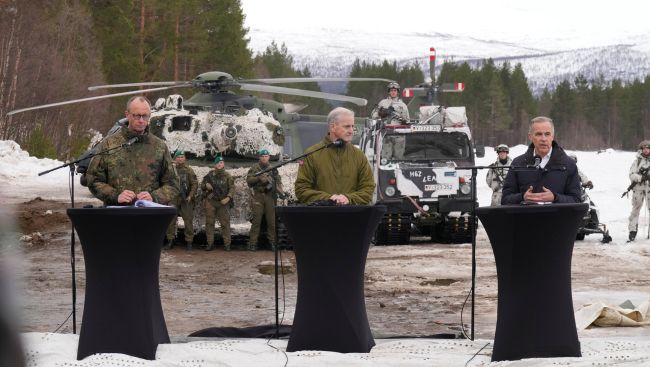
Carney made the comments at a Friday news conference in Bardufoss, Norway, alongside the leaders of Norway and Germany.
The three leaders all agreed that the sanctions are necessary to maintain pressure on Russia to end the war in Ukraine, which has raged on for more than four years now.
German Chancellor Friedrich Merz said six out of seven of the G7 leaders agreed during a Wednesday conference call that they should not ease their Russian sanctions as the Middle East war pushes up gas prices.
Merz said he was a "little bit surprised" to hear this morning that the American government had decided otherwise.
Norwegian Prime Minister Jonas Gahr Store said allies should be increasing their pressure on Russian President Vladimir Putin.
“There should be no pressure on the energy side taken off Russia," he said. "It needs to be consistent and it needs to be felt from the Russian side so they come to the negotiation table, accept a ceasefire and accept a just and durable peace.”
Analysts have said the Iran war's disruption of the global supply of oil is helping the Russian economy and filling Moscow’s war chest, fuelling the invasion of Ukraine. Lower oil revenues had pressured Putin into borrowing from banks and raising taxes.
Just last month, as he marked the anniversary of the start of the full-scale Ukraine war, Carney rolled out new sanctions on 100 vessels in the tanker fleet Russia uses in its attempts to evade sanctions.
Oil and gas revenues made up about a quarter of the Russian treasury's revenues last year, even with global sanctions in place, according to a Canadian government sanctions analysis published in February.
It said Russia's seaborne exports make up a "significant" amount of the global oil supply — about nine per cent.
Russia relies on a "shadow fleet" of vessels to distribute oil covertly to evade sanctions. It employs deceptive tactics such as disabling tracking, concealing ownership and mislabelling cargo.
The Trump administration has meanwhile sought to allay fears about the economic impacts of the sanctions pause and the war in Iran.
As he announced the temporary sanctions reprieve, U.S. Treasury Secretary Scott Bessent claimed on social media Thursday that the move would not significantly bolster Russia’s financial position.
“This narrowly tailored, short-term measure applies only to oil already in transit and will not provide significant financial benefit to the Russian government, which derives the majority of its energy revenue from taxes assessed at the point of extraction,” Bessent's post said.
The war also has stoked fears that Persian Gulf oil production could be blocked for a long time and feed global inflation.
U.S. Secretary of Defence Pete Hegseth said at a Friday briefing that the U.S. will not allow Iran to block energy shipments through the Strait of Hormuz.
Trump said in a Fox News interview that aired on Friday that the American military will hit Iran "very hard over the next week," and that the U.S. may ultimately resort to escorting oil tankers through the strait.
"We would do it if we needed to," the president said.
Picture Courtesy: THE CANADIAN PRESS/Adrian Wyld