Friday, June 12, 2026
ADVT 
National

COVID-19 deaths hit racialized communities hardest: Stats Can

Darpan News Desk The Canadian Press, 28 Oct, 2020 10:07 PM
  • COVID-19 deaths hit racialized communities hardest: Stats Can

A new Statistics Canada report says communities with the most visible minorities had the highest mortality rates during the first wave of the novel coronavirus.

The report's authors say it is more evidence that the pandemic is disproportionately affecting visible minorities, who are more likely to live in overcrowded housing and work in jobs that put them more at risk of exposure to COVID-19.

Other studies have shown visible minorities are more likely to suffer from conditions such as diabetes and high blood pressure, which are considered to make an individual at higher risk for serious illness or death from COVID-19.

In the four biggest provinces — which account for 99 per cent of the deaths from COVID-19 between March and July — death rates from COVID-19 were twice as high in communities where more than one in four people identify as a visible minority, compared with communities where less than one per cent of residents did.

The death rates are adjusted for age to account for different age structures in different neighbourhoods.

It found in communities where less than one per cent of the population identified as a visible minority, the death in the first wave was 16.9 for every 100,000 people. In communities with a visible minority population between 10 and 25 per cent, the death rate was 27.3 and for communities with visible minority populations of more than 25 per cent, the death rate was 34.5.

In Ontario and Quebec, the rates were 3.5 times as high in communities where more than one-fourth of residents identify as visible minorities.

Nearly 8,800 people died in the first wave of the pandemic in Canada, 94 per cent of them in Quebec and Ontario.

Canadian and provincial public health agencies do not collect much data on the race of patients with COVID-19, so Statistics Canada used the national database on deaths and census data on visible minorities and neighbourhoods to compile the report.

Chief public health officer Dr. Theresa Tam, who said early in the pandemic there were no plans to collect race-based data on cases of COVID-19, said Wednesday that finding out who is most affected by an illness like COVID-19 can help drive policy decisions about where to direct resources.

"So under those circumstances, doubling efforts to focus on providing support, whether it's lab testing, or anything else in those communities, I think would be extremely important," she said.

MORE National ARTICLES

Poultry plant in Coquitlam, B.C., closed by health authority over COVID-19

Poultry plant in Coquitlam, B.C., closed by health authority over COVID-19
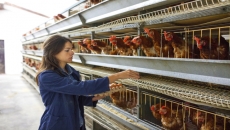
A poultry processing plant in Coquitlam, B.C., has been closed by Fraser Health after an outbreak of COVID-19 among its workers. The health authority says two workers at the facility operated by Superior Poultry Processors Ltd. have tested positive for the virus and all employees have been screened.

Poultry plant in Coquitlam, B.C., closed by health authority over COVID-19

Expectant mothers to get financial help: Feds

Expectant mothers to get financial help: Feds
Expectant mothers who have been left out of a key COVID-19 emergency-aid program will receive financial help, and will qualify for federal benefits when they go on maternity leave, says Canada's employment minister. Pregnant women who applied for employment insurance at the outset of the pandemic have found that they weren't automatically transferred over to the Canada Emergency Response Benefit when it became available earlier this month.

Expectant mothers to get financial help: Feds

Trudeau unveils rent relief for small businesses hurt by COVID-19

Trudeau unveils rent relief for small businesses hurt by COVID-19
The federal government is providing rent relief to businesses that can't afford to pay their landlords at a time when their operations are seriously curtailed or shut down due to the COVID-19 pandemic. The federal help, expected to lower rent by 75 per cent for affected small businesses, will be provided in partnership with the provinces and territories, which have jurisdiction over rents.

Trudeau unveils rent relief for small businesses hurt by COVID-19

Nova Scotia mass shooter had unlicensed guns: police

Nova Scotia mass shooter had unlicensed guns: police
Police say the man who went on a murderous rampage through five Nova Scotia communities was likely using unlicensed firearms, and investigators are trying find out how he obtained illegal weapons.

Nova Scotia mass shooter had unlicensed guns: police

PM suggests U.S. experience will inform Canada's plan

PM suggests U.S. experience will inform Canada's plan
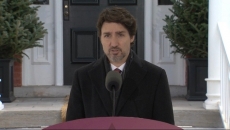
Canada's federal and provincial governments will be watching closely for teachable moments as jurisdictions in the United States start to lift personal restrictions and reopen businesses in the wake of the COVID-19 pandemic, Prime Minister Justin Trudeau says. The best way forward will be informed by what works — and also what doesn't — as the U.S. and the rest of the world emerges from the crisis, Trudeau said Thursday during his daily briefing outside the front door of his Rideau Cottage residence.    

PM suggests U.S. experience will inform Canada's plan

Trudeau says military is short-term solution to caring for seniors

Trudeau says military is short-term solution to caring for seniors
Prime Minister Justin Trudeau has promised the military will respond to provincial requests for assistance at long-term care facilities hit hard by COVID-19, but says the measure is a short-term solution and Canada should not "have soldiers taking care of seniors." Trudeau appeared visibly upset as he made the comments during his daily news conference on Thursday.    

Trudeau says military is short-term solution to caring for seniors