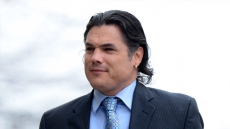
I’m proud of the fact that we balance our budget when other provinces and jurisdictions do not, that’s a tribute to the team. I am proud of the fact that we have the AAA credit rating and have maintained that. That’s a tribute to the team.
1. How has your role as Finance Minister of British Columbia benefited the province’s economy or finance sector?
With regards to my role, I always say that we are a team. We are a team in the government; the captain of the team is the Premier and I play the role as a Finance Minister. So when I say that I’m proud of the fact that we balance our budget when other provinces and jurisdictions do not, that’s a tribute to the team. I am proud of the fact that we have the AAA credit rating and have maintained that. That’s a tribute to the team. These are achievements that we have secured as a province; our success is something we have enjoyed as a team.
2. What goals do you plan to achieve as Finance Minister? What is your biggest challenge?
We have achieved a lot of success in terms of our diverse-wide economy – the progress we have made in terms of trade. We have more work to do in India, for example, which you will hear more about in the next few months. When I talk about balanced budgets and AAA credit ratings, these are all important achievements.
The biggest challenge we face is to ensure the benefits of that fiscal strength are shared with all families. There are still families in BC that do feel the benefits of what we have achieved. For me, making sure that every child that wants to get post-secondary education or training can do that irrespective of what their family’s financial circumstances are, that is a challenge that we made progress on but we haven’t achieved in it entirety.
3. You recently unveiled a 15 per cent additional real estate tax on foreign buyers in BC. Do share your thoughts on this decision?
I would like to point out how we did it. We said that first we are going to get the data; we are going to get some reliable information on who is purchasing real estate, and how many people are non-permanent residents. And rather than simply being reactionary for political reasons, we got some hard data. Through the years, what I have tried to do and what Premier Clark has tried to do in the situations where we are confronted by difficult choices, is to make decisions based on fact, not conjecture, not what might be popular for the moment politically, but to make decisions based on fact.
The thought was to introduce a measure that would cool down somewhat the foreign involvement and the upward pressure foreign involvement was having on our domestic residential real estate market. We see this as a temporary measure to allow us to get on with the real solution, which is increasing supply. What we have done here is to try to temper demand but people love the lower mainland. We are an international province, international country; people are going to continue to come here. What this will do is provide us with an opportunity to catch up in generating more housing supplies. At the end of the day, that is the solution to the upward pricing pressure that we see. We got to build more homes, town homes, condominiums, and rentals for all the people who want to live in and around the lower mainland.
4. What is the permanent solution for the rising real estate problem?
It’s a problem born out of success, it’s a reason people want to come here. They see a future for themselves and their families here. They like our stability, our competitiveness, so I think what this taxation measure does hopefully is provide us with an opportunity. I still don’t think people understand that within metro Vancouver there are over a hundred thousand units of housing awaiting approval. We got to get on with approving those houses. Every time we delay, it’s another BC family that is denied the opportunity of entering the housing market and buying a home.
5. Do you plan to extend this additional tax to other parts of BC in the future?
We are going to be tracking what happens outside of Metro Vancouver very carefully. The areas that are pretty much on our radar screen is border areas with Metro – Squamish in the northwest, Abbotsford, Chilliwack in the east, and southern Vancouver island Victoria. We are watching now very carefully if international activity is shifting in those areas. We created in the legislation recently the ability to extend the new tax, and if circumstances require or want that, we are prepared to do it.
6. What reactions have you received from people on this tax introduction?
The decision to introduce this measure has been very popular. Taxation changes occur very quickly and the transition is always challenging. To the extent that I have heard concerns, it has been around the speed of the transition, I have heard very little criticism about the measure itself.
7. You are the MLA for Abbotsford West. What goals do you have in mind for the growth and development of the city?
I have been lucky for 23 years to represent a very unique part of BC and the opportunities that exist there like agro food. Fraser Valley contains the most productive farmland in all of Canada, and so finding new markets for our agro food products [is a goal]. I’m excited to see blueberries going into Mumbai, for example, and to see the market there. That scenario I remain very excited about. And aerospace – the Abbotsford Air Show jus ended. The world is looking to BC for leadership in the aerospace sector. It is very exciting for me to come from a part of BC that is in many ways home to the aerospace sector.
8. What project/initiative are you working on currently as Finance Minister?
The budget, it’s not easy to balance the budget. If it was, we wouldn’t be the only province doing it. I never want a child or a young person to be denied an opportunity to education or training because their families didn’t have enough money. It’s why maybe one of the things I am proud of as Finance Minister is when we made the decision to give every child when they reach six years of age a registered education saving plan and start them off with $1,200 dollars that can grow up to $10,000 dollars. I know it takes time and doesn’t happen overnight but the single most important thing we can do is to make sure our young people get the education and training that they need and have the financial support to secure that education and training. I think that remains the focus for me and a highlight for me. The most important thing the government does is education, the better educated we are, the healthier we are.
9. What has been the most defining point of your career so far?
The defining moment was when I realised how we can take our fiscal strength – our financial strength as a province – and turn that into investments in youth in ways no other province in Canada can do right now. We are able to invest in young people without adding to their debt load. The defining moment for me was when I realised that as important I think it is for the government to be fiscally responsible, the most important reason to doing it is that it gives us the ability to help young people and create those training, education opportunities that they need, and that’s what our society needs going forward.
10. What are your other interests beyond work?
I’m an aged and recovering hockey player. I like sports; I enjoy watching and playing sports. I still play hockey when I can. I also grew up in a farm and live in a farm. I enjoy working there when I get time to time. I find it very therapeutic. There is nothing like getting your hands dirty in the earth to remind you what’s real and what’s important.