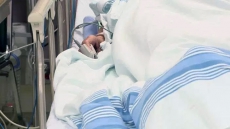
VANCOUVER — Watching paramedics revive their son from near death six times for the same condition that had him in the emergency room 13 times exhausted Jill and David Cory, but they kept hoping he'd get the help he needed to survive.
That hope came to an end on March 8, 2015, when David Cory found 23-year-old Ben Cory dead on the porch at their home in Calgary.
"I didn't even know he was home," Cory said of his son, who'd often stayed at his girlfriend's place.
The family moved from Vancouver so Ben could enter a one-year treatment program starting in 2009 at the Alberta Adolescent Recovery Centre, a private facility that focuses on involving a client's family.
Jill Cory said despite the gains her opioid-addicted son made with the help of staff who were in recovery and understood drug addiction, a lack of ongoing support that would include housing and follow-up through linked programs in the community and the health-care system meant Ben didn't have the skills to cope.
"It's a system that's not a continuous system," she said in an interview. "It's a partial intervention. We've had as many as 15 emergency people in our home resuscitating Ben. Why are we using our resources at that end, in an emergency, instead of a proper continuum of services?"
Ben Cory's story, among those of others caught in the cycle of addiction, is told in the Telus Health documentary "Painkiller: Inside the Opioid Crisis." It's available through Optik TV, YouTube and accessible at screenings in various cities across Canada.
"It is life destroying, and it is family destroying, and it can be different," Jill Cory said, adding her son tried ecstasy as a teen before using harder drugs including Oxycontin and fentanyl to try to alleviate his anxiety.
Five years after countless hospitalizations, including one when Ben was on life support, Cory said the family decided to move to Alberta so all of them, including Ben's older sister, could be part of the recovery process.
The couple had already spent $6,000 a month for a five-month treatment program supported by their doctor in British Columbia, but it was ineffective, they said, adding people should not have to spend their own money in a publicly funded health-care system and not everyone can afford to do that.
Jill Cory said they came to understand addiction is a chronic relapsing disease that requires ongoing care but parents are often left to deal with it alone.
"We'd be sleeping with him on our floor in our bedroom with the doors locked so we'd know he was safe," she said.
"You wouldn't give people three out of 10 chemo treatments and hope that somehow they miraculously get better on their own."
These days, the Corys support other families whose children are struggling with addiction.
Like other parents in the documentary, they are also calling for decriminalization of illicit drugs based on an understanding that addiction is a chronic relapsing disease that makes people more vulnerable to overdose after they've been in treatment.
Moms Stop the Harm, an advocacy group whose loved ones have fatally overdosed, has joined that effort, pushing the federal government to make that decision as the number of fatal overdoses rises.
However, Prime Minister Justin Trudeau has said No to decriminalization.
Statistics Canada said earlier this month that 10 Canadians fatally overdosed each day between 2016 and 2018.
Data from a federal task force on opioid deaths said nearly 4,000 Canadians died as a result of overdoses in 2017, a 34 per cent increase from the previous year.