The federal Liberal government is promising cash-strapped cities billions of dollars in permanent funding for their public-transit systems — though most of the money won’t start flowing until later in the decade.
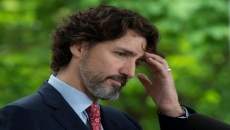
Prime Minister Justin Trudeau made the $14.9-billion announcement on Wednesday as he prepared for a virtual meeting with mayors from Canada’s largest cities, many of them struggling to make ends meet due to the COVID-19 pandemic.
"These investments will support major public transit projects like subway extensions, help electrify fleets with zero-emission vehicles," Trudeau said during a virtual news conference.
“They will also be used to meet the growing demand for walkways and paths for cycling and help rural and remote communities deliver projects to meet their mobility challenges.”
I’m joining @CathMcKenna and @JonathanWNV to announce new and permanent funding for public transit infrastructure across the country. Watch live for the details: https://t.co/7DOThOADvB
— Justin Trudeau (@JustinTrudeau) February 10, 2021
About $6 billion will be made available to municipalities right away for projects that are ready to go, according to the government, while the remainder will go into a $3-billion per year fund that can will be doled out on a project-by-project basis starting in 2026-27.
Exactly what needs towns and cities will have over the long term remains uncertain as municipal leaders consider how their communities will look after the pandemic, including the extent to which work-from-home situations will replace traditional commutes to the office.
Trudeau acknowledged those uncertainties, but suggested the importance of public transit will continue to grow, particularly as governments at all levels move to curb greenhouse gas emissions and fight climate change.
“There will be no question that cities will still be incredible, vibrant places for economic growth for jobs,” he said.
“Yes, there will be more working from home, but people will still want to be getting around and there may actually be less need for certain single-occupant vehicles, and more use of better quality, cleaner, and safer public transit.”
The federal government says it will work with provinces, territories and municipalities along with Indigenous communities and others to identify projects and other potential uses for the $3-billion annual fund.
Infrastructure Minister Catherine McKenna's spokeswoman Chantalle Aubertin says that unlike previous infrastructure commitments, the new money will not be specifically divided up between provinces, but instead put into a pot that can be accessed whenever a project is ready.
That is because some provinces have not been using the money previously allocated to them, while others have been calling for more investments.
"Our government has already invested $13.6 billion in over 1,300 public transit projects since 2016," Aubertin said in a statement.
"The allocations are by province, with some provinces hardly accessing any funding at all for public transit while others with more ambition have met or exceeded their federal allocation. That’s why we are investing $5.9 billion of new money over five years to accelerate job-creating projects across the country on a project-by-project basis."
Edmonton Mayor Don Iveson, who is also chair of a group of mayors from Canada’s largest cities, appeared alongside Trudeau and indicated the money will not specifically help municipalities that are struggling to pay for public transit during the pandemic.
“We're continuing that conversation with our federal and provincial partners,” he said.
Iveson nonetheless welcomed the promised long-term funding as a win for municipalities that have long been calling for stability when it comes to building and expanding public-transit systems, as well as a way to help the economy and fight climate change.
“Today's announcement is a landmark investment in the post-COVID recovery that Canadians depend on,” he said.
“Investing in transit creates jobs, it shortens commutes, it reduces emissions and altogether, it builds the backbone of livable and competitive Canadian cities.”