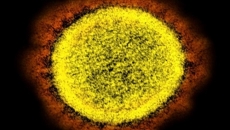
On Monday AstraZeneca became the third pharmaceutical company this month to announce promising results from a late-stage coronavirus vaccine clinical trial, joining Pfizer and Moderna as the leading candidates for developing an effective prevention for COVID-19.
While all promise a suitable vaccine can be rolled out within the coming months, they differ slightly in efficacy, delivery and other components.
So how do we judge the leading candidates so far, and how might they impact a vaccine rollout program in Canada?
The Canadian Press asked Kelly Grindrod, an associate professor at the University of Waterloo's School of Pharmacy, and Dr. Earl Brown, a virology and microbiology expert at the University of Ottawa, to break down those questions.
HOW DO THEY WORK?
All three of the drug companies are incorporating novel techniques in developing their vaccines, with Pfizer and Moderna using messenger RNA (mRNA) and AstraZeneca using a non-replicating viral vector.
AstraZeneca's vaccine, developed with Oxford University, takes a chimpanzee cold virus that's not harmful to humans and "hides" pieces of the coronavirus in it, Grindrod explained. Non-replicating means the virus won't actually reproduce throughout the body.
"It shows our cells how to make the coronavirus spike protein so that our bodies can actually have an immune response to it," she said.
Brown explained it as a "dummy virus" that has essentially had its genes stripped and replaced with the spike protein gene for the coronavirus. The vaccine makes an mRNA molecule from the genome and that molecule makes the protein, he said.
"The protein is put on the cell, the immune system recognizes it and makes antibodies — therefore immunity."
The mRNA vaccines are similar, but structurally different with Brown simplifying it by saying Pfizer and Moderna "put the RNA right into your arm."
"Their vaccine is a synthetically-produced mRNA packaged in a fat coating," he said. "So they inject that into your muscles, that little fat gloms onto your cells, fuses with them and becomes part of the cell and dumps that mRNA into your cell. And then the mRNA is translated into protein."
Grindrod said both vaccine methods "show us the genetic component" our cells need to make the antibodies.
"It's just really how it's delivered," she added.
HOW EFFECTIVE ARE THEY?
AstraZeneca says its vaccine was up to 90 per cent effective when a half dose was followed by a full dose a month later. Another method, where two full doses were distributed a month apart, showed to be 62 per cent effective.
Moderna said last week that preliminary data showed a 94.5 per cent efficacy, and Pfizer, the first to share its initial results earlier this month, upped theirs from 90 to 95 after releasing final trial results last week.
While the medical journal "The Lancet" did review some of AstraZeneca's results, Grindrod says to remember that most of the efficacy claims from the clinical trials are from press releases based off preliminary data.
"Now what we're waiting for is the actual study, the full published, peer review that you can see and compare efficacy and safety and how they measured it," she said, adding she expects peer-reviewed studies on the vaccines to emerge soon.
"Things are coming at much different timelines than we're used to."
Another factor that's still unknown is how long immunity lasts, and whether we will need booster vaccines in the future.
WHAT ARE THE HURDLES FACING DISTRIBUTION?
All three of the leading vaccine candidates require two doses, injected roughly one month apart, and there could be challenges in getting people back to a doctor or pharmacy to receive their second dose.
Grindrod said tracking will become particularly important with a two-dose vaccine, especially if AstraZeneca goes forward with injecting different amounts of the vaccine per dose. Rollout can become even more complicated when there's a surge for the vaccine, as we saw this year with the flu shot.
"You have to track who got which vaccine, which dose, and make sure they come back three to four weeks later," she said.
Where AstraZeneca could have the upper hand in distribution, however, is in its storage temperature. The company says its vaccine can be stored in a fridge, unlike Moderna and Pfizer, which require freezing temperatures due to the instability of the mRNA, Brown says.
Pfizer's vaccine needs to be stored at minus-70 C, while Moderna's needs a temperature around minus-20 C — about the same as a regular freezer.
"For really ultra-low temperature freezers, you find those in hospitals and research laboratories, but not many other places," Brown said. "So we aren't prepared for (a vaccine that requires) ultra low freezers."
ARE THERE ANY SIDE EFFECTS?
Side effects for all three vaccines have been minimal — things like sore arms, fatigue and headaches that generally don't last long — and Brown says the presence of those reactions are a good thing.
"When you're vaccinating, you're stimulating an immune response, and those are immune-regulated things," he said. "So a sore arm reaction is good, because that means it's working for you."
More safety data, which can only be garnered from monitoring trial participants over a longer term, is needed to judge further, he says.
WHAT'S NEXT, AND WHAT DOES IT MEAN FOR CANADA?
The Food and Drug Administration (FDA) is meeting to discuss Pfizer's emergency use authorization request on Dec. 10, which means a vaccine rollout could happen in the United States within the next month.
But the vaccines would need approval from Health Canada in order to get them here.
Health Canada's website says it will review authorization submissions from companies to determine "evidence of safety, efficacy and manufacturing quality for each vaccine."
Canada locked in a supply of potential vaccine candidates when it signed agreements with a number of pharmaceutical companies, including AstraZeneca, Pfizer and Moderna months ago, and that should accelerate a rollout when ready.
But the actual time frame will depend on when these drug companies can show enough safety data to move forward, Brown said.
Grindrod expects a viable candidate to be approved quickly after safety and efficacy can be shown.
"We might see early 2021 and it's not clear whether that's January or February or around that time," she said. "From there, as we get more doses and more vaccines are approved, then we may see a broader population getting vaccinated. But it's hard to say when that will happen."