Ontario is extending a stay-at-home order, limiting interprovincial travel and shutting outdoor recreational facilities while giving police new powers to enforce the restrictions amid an onslaught of COVID-19.
The Opposition decried the measures as too weak to flatten the curve while the Canadian Civil Liberties Association called the announcement the "Black Friday of rights slashing."
The new restrictions do not include mandated paid sick days, which labour groups and public health experts have said would protect vulnerable essential workers and help stop the spread of the virus in workplaces and the community at large.
Under the new measures, distribution centres, warehouses and manufacturing plants will remain open while outdoor gatherings will be restricted to members of the same household — people who live alone can join another household — and all recreational facilities such as sports fields, playgrounds and golf courses will be closed.
In addition, essential retailers will have to further lower capacity limits to 25 per cent, indoor religious services will be limited to 10 people, and non-essential construction will have to shut down.
Premier Doug Ford said the province was on its heels and tougher measures were needed.
"We're losing the battle between the variants and vaccines," Ford said. "The reality is there are few options left."
We all have a role to play to protect our loved ones & our communities.
— Doug Ford (@fordnation) April 16, 2021
That's why a temporary emergency order has been issued to provide police & provincial offences officers w/ enhanced authority to ensure people follow public health measures to stop the spread of #COVID19. pic.twitter.com/YnHDXhOrOc
The difficult truth is every public health measure we have comes with a massive cost, but we must do what’s necessary to save the lives of Ontarians.
— Doug Ford (@fordnation) April 16, 2021
It all comes down to 3 things:
🚘Limiting mobility
👮🏾Enforcing rules
💉Getting vaccines into armshttps://t.co/WzPP9TzufS pic.twitter.com/nDY0AAumIO
To enforce the measures, police and bylaw officers will now be able to stop motorists and pedestrians to ask them where they live and why they're not at home.
The new police measures drew immediate condemnation from civil liberties activists.
The Canadian Civil Liberties Association said granting police the authority to stop and question anyone at random risks a "rash of racial profiling."
"Random police stops during COVID are unconstitutional, presuming those outdoors or driving to be guilty," said Michael Bryant, head of the CCLA.
#BREAKING It’s a Black Friday of rights slashing by Queen’s Park today, risking a rash of racial profiling and overbroad police powers, presuming everyone outside guilty until proven otherwise. The mobility rights restrictions fail to achieve constitutional proportionality.
— Canadian Civil Liberties Association (@cancivlib) April 16, 2021
The group also said limiting interprovincial travel will hurt lower-income individuals, prioritizing first-class flyers over drivers.
The Toronto Police Service said it was reviewing the new orders.
"The provincial government announced stricter measures today to stop the spread of COVID-19 which includes new, temporary powers for police officers in all services across Ontario," a service spokesperson said in an email.
"Prior to any change in our enforcement strategy, we will notify the public on how we plan to implement the new provincial orders."
NDP Leader Andrea Horwath said the measures appeared too weak to flatten the curve. She also expressed concern about the impact the restrictions, and the new enforcement powers, could have on "front-line essential heroes."
Doug Ford is ignoring the clear direction of experts and walking us deeper into crisis.
— Andrea Horwath (@AndreaHorwath) April 16, 2021
He is choosing to blame everyone but himself. He is choosing policing over public health.
LIVE — NDP Leader Andrea Horwath calls Doug Ford’s watered-down changes yet another choice to ignore experts, and march Ontario deeper into crisis — leaving people to pay a terrible price. https://t.co/3x0nvJ4AFC
— Andrea Horwath (@AndreaHorwath) April 16, 2021
Starting Monday, checkpoints will be set up at the border with Quebec and Manitoba to prohibit non-essential entry. People crossing for work or transporting goods, among others, will be allowed in.
The new measures came just hours after Ontario's science advisers warned that the province's COVID-19 infections could soar past 15,000 cases per day by June without tougher restrictions.
The dire predictions came after the government pleaded with other provinces to send in nurses and health workers as its hospital system was pushed to the brink.
"Our progress is both frustrating and frightening," Dr. Adalsteinn Brown, co-chair of Ontario's science advisory panel, said in presenting the latest projections.
Ontario reported 4,812 new cases — another record — on Friday, up from Thursday's record of 4,736. It also reported 25 more deaths related to the virus.
The latest data from Critical Care Services Ontario showed 684 COVID-19 patients in adult intensive care units. That number had reached 701 by Friday.
Hospitals were "bursting at the seams" and care was already being compromised, Brown said as his group urged Ford to order everyone to stay home for six weeks, and ramp up vaccinations as the only way to gain some control of the pandemic.
Vaccines were not reaching high-risk people fast enough to stem the surge in hospital and ICU admissions, Brown said. People at lowest risk were still receiving more vaccines than those at highest risk, he said.
"That is a difference that needs to be closed," Brown said, noting the province would see "a very, very big return" in prevented cases if shots were allocated to high-risk communities.
According to the advisory group, 60 shots of a COVID-19 vaccine would prevent a single case under an age-based approach. By comparison, just 35 vaccines would prevent a single case if high-risk communities were targeted.
Ensuring workplaces were safe, supporting workers with sick leave and limiting mobility would make a provincial shutdown more effective, Brown said.
In a letter to all provinces and territories sent Friday morning, Ontario's Deputy Health Minister Helen Angus said the province was short thousands of nurses and asked whether they had any to spare. The pandemic, Angus said, had strained hospital capacity in southern Ontario, particularly intensive care.
Ontario was expected to be short 4,145 nurses in the hospital sector alone over the next four months, Angus said, while asking her counterparts for 620 health professionals, including nurses and respiratory therapists.
"We are projecting a need for this critical support for four months following the anticipated peak of the third wave," Angus wrote.
Alberta, however, declined, saying it was strapped itself, while the premiers of Newfoundland and Labrador and Nova Scotia indicated they were unwilling to share vaccines but were open to giving medical assistance if they could.
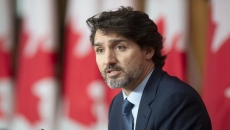
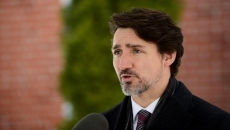
In Ottawa, Prime Minister Justin Trudeau pledged federal help as he acknowledged the dire COVID-19 situation in Ontario, particularly in Toronto.
The Canadian Red Cross was on standby for deployment of mobile vaccination teams in areas with highest need in Ontario, the prime minister said, but Ford's office said the offer was appreciated but ultimately of little use given the shortage of vaccines.
Ford took shots at the federal government over the vaccine supply and what he said were lax international border controls for the surge in coronavirus variants now plaguing Canada.
He urged limiting air travel, tightening the U.S. border and doing more on testing and quarantining new arrivals.