For Denis Cote, one of the worst parts of the Persian Gulf War was entering the conflict zone not knowing what to expect as sirens blared in the dead of night, warning of a missile attack.
"We didn't know when we were coming home. We didn't know where we were staying," said the 62-year-old veteran from Edmonton.
"We didn't know any of the situations or the setup — we were walking into just unknowns."
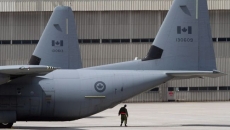
The former aircraft technician was deployed to Doha, Qatar, where Canada sent 16 fighter jets and more than 100 military personnel.
Cote landed there 20 minutes before Iraqi forces launched their first Scud missile attack on coalition forces stationed in Saudi Arabia. Everyone at his base about 300 kilometres away were on high alert and took cover.
"It was a rude awakening — welcome to the Gulf."
About 4,500 Canadians were deployed to the Middle East in 1990 and 1991 in a United States-led campaign to liberate Kuwait, which was annexed by Saddam Hussein's forces.
It was also the first major conflict for the Canadian military since the Korean War in 1953.
"There was nobody you could learn off of," Cote said. "We were all learning together."
Saturday marks 35 years since the Persian Gulf War ended, but Canadians who were deployed there have been fighting another battle — getting better recognition for their role in the conflict.
Veterans have long advocated for their service to be designated as wartime instead of "special duty" by the federal government.
"We weren't filling sandbags in Winnipeg ... we went to a place where people were going to shoot at you and try to kill you," said Harold Davis, president of Persian Gulf Veterans of Canada.
Davis, who was a weapons technician, said the designation change is about acknowledging the risks soldiers there faced.
"Credit needs to be given where credit is deserved, and recognition for our service in that respect is a big thing for us."
One of Canada's more notable missions was the harrowing rescue of the USS Princeton, which had been seriously damaged by Iraqi mines off the coast of Kuwait. The HMCS Athabaskan navigated through minefields to escort a coalition fleet tugboat to safely extract the U.S. warship.
Although Canada never declared war, Davis said the military's role was not a peacekeeping one.
He said Persian Gulf War veterans want the same recognition as those who fought in Korea.
"It took 28 years to be recognized for their service as war veterans," said Davis, adding those troops were deployed under United Nations resolutions — just as they were during the Gulf War.
A 2024 House of Commons Committee report on Persian Gulf War veterans states the change to wartime duty would not affect compensation. But it found disability payments were lower for any claimant after 2006, when the Pension Act was replaced by the Veterans Well-being Act.
Sen. Rebecca Patterson, who served as a nursing officer in the Persian Gulf War, recommended in the report that the two acts be harmonized. Others suggested giving veterans the choice between the benefits of either one.
Those changes, however, would cost the government billions of dollars, the report said.
Veterans Affairs Canada said in a statement Thursday that the term "wartime service veteran" has been used internally for administrative purposes.
"The government of Canada honours and supports all veterans – regardless of how a conflict is classified," it said.
The department said it would be hosting various events to commemorate the 35th anniversary of the conflict in Ottawa and Halifax until Wednesday.
Veterans have also been fighting for years to have Gulf War Illness listed as a compensable condition by Veterans Affairs — a recommendation from the committee report that was officially adopted in December.
Gulf War Illness is a chronic condition with symptoms that include fatigue, headaches, joint pain, insomnia, indigestion and cognitive issues. It's linked to exposure to nerve agents from bombed Iraqi storage facilities as well as pesticides and pyridostigmine bromide pills used by coalition forces.
Davis believes Veterans Affairs only recognized the illness because the World Health Organization added it to the International Classification of Diseases two months earlier.
"As soon as it happened, they jumped on it. And I got to give them credit for that," he said. "But they really had no choice."
He said troops were also exposed to heavy smoke from Kuwaiti oilfields that were set on fire by Iraqi forces.
"All we had at the time were surgical masks, that is what we wore at the time on the flight deck," Davis said. "I remember taking the mask off and I just wrung it out — nothing but black came out."
Another sore spot for veterans is that the Persian Gulf War is not inscribed on the National War Memorial. The Ottawa monument lists the dates of the First World War, Second World War and Korean War. The war in Afghanistan was added in 2014.
"Our Afghan brothers and sisters, they deserve to be up there," Davis said, adding their service was also designated as special duty.
"Within the next five years, you will not have another wartime veteran left in this country," he said. "So, are you going to have special duty area veterans? It's just not right."
Cote said there's no doubt that troops were sent to fight in a war.
"We shouldn't have to declare war — we were going in with our allies who already declared war," said Cote, who was also deployed to Rwanda for peacekeeping missions and the Second Gulf War.
"As soon as we're assisting our allies, we're at war."
Although no Canadians died during combat, Cote said he lost some good friends to suicide after they came home.
"We lost a lot of people mentally," he said. "I've seen some changes in others since they came back, and I know my spouse will tell you she has seen some changes since I came back."
Cote said the Persian Gulf War stands out in his military career because he made some of his closest friends there.
"We didn't have a lot of people that knew what we went through."
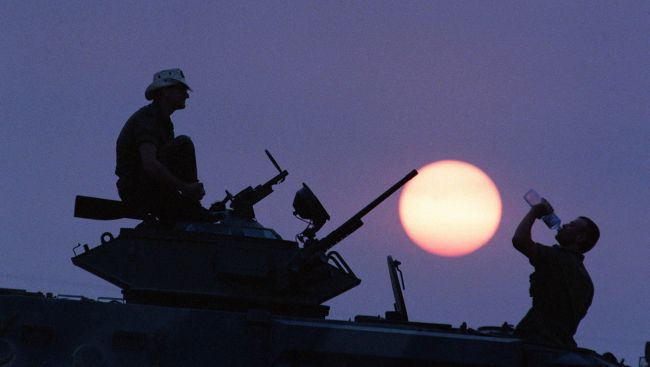
Picture Courtesy: CP PHOTO/Hans Deryk