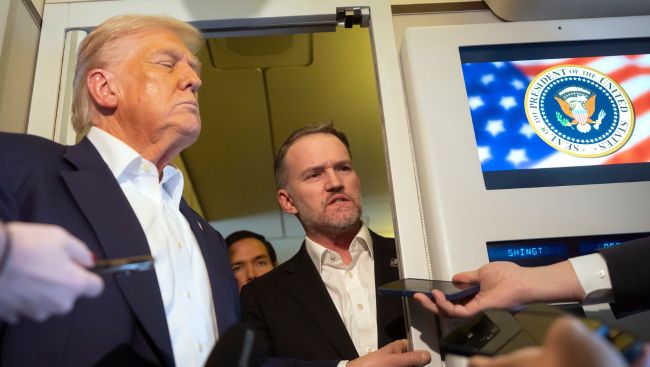
Canada is facing the prospect of entirely new tariffs from U.S. President Donald Trump's administration after Washington claimed Ottawa has a poor track record on preventing importation of products of forced labour.
The move comes as Canada's biggest free trade pact, the Canada-United States-Mexico Agreement, is up for renewal.
What is the Trump administration upset about?
The last time Canada renegotiated the continental free trade agreement, during the first Trump administration, Ottawa changed the wording in a customs law on forced labour rules in 2020.
The White House says that since then, there has been little evidence Canada has stepped up enforcement.
The office of the United States Trade Representative accused Canada and a host of other countries of failing to enforce bans on forced labour in a new report released late Tuesday.
The report said the number of reported enforcement actions Canada has taken against forced labour products appears to be "minimal" and accused the federal government of "failing to effectively enforce its forced labour import prohibition."
It said the Canada Border Services Agency does not appear to publish official information about its enforcement efforts, and cited numbers suggesting enforcement is weak.
It pointed to a report by the Coalition Against Forced Labour that said Canadian border officials intercepted only 50 shipments on suspicion of forced labour, and just two shipments were turned away.
The border services agency has said that it has intercepted and detained 50 shipments over concerns about forced labour since 2020. Two shipments were found to have been produced using forced labour — a 2024 shipment of textiles and one in 2025 containing frozen seafood.
Martha Goncalves, a partner at PwC Canada and its national leader on customs and international trade, said she is not surprised this long-standing issue has bubbled up again.
"Canada, essentially for four years, was not in compliance with this particular article of USMCA," she said, using another name for the continental trade pact.
"It filters into our negotiations or the review of USMCA because it was part of the USMCA initially."
She said that by taking years to bring in forced labour provisions to enforce the rule, and by failing to make it a priority, the government didn't "exactly give us leverage" in the upcoming talks.
Is it all about the tariffs?
Former Liberal MP John McKay said the United States allows private firms to produce exports with prison labour and accused the Trump administration of letting enforcement slide on a Joe Biden-era law called the Uyghur Forced Labour Prevention Act.
"It's hypocrisy heaped on hypocrisy, heaped on hypocrisy."
He said forced labour is just an excuse to launch more tariffs that can be used as a bargaining chip in trade talks.
"It's just got nothing to do with forced labour and everything to do with Trump thinking that he can get an advantage in the negotiating position."
The Trump administration launched investigations of forced labour under Section 301 of the Trade Act of 1974 in March in an effort to bolster its global tariff agenda.
The U.S. Supreme Court struck down tariffs imposed under the International Emergency Economic Powers Act this year, a law the president used for Trump's "Liberation Day" tariffs and fentanyl-related duties on Canada.
Lack of enforcement
McKay, now working at the consultancy David Pratt and Associates, sponsored a bill a few years ago to bring in tougher reporting requirements on forced labour.
Parliament passed that bill in 2023. It forces Canadian companies to report annually on efforts to prevent child and forced labour from entering their supply chains.
While it has led to companies filing more paperwork, advocates have accused the government of failing to adequately enforce the legislation.
While Ottawa can issue fines and launch investigations under the law, it hasn't used it to access private companies' records or issue penalties for non-compliance.
McKay also said the government has not done any kind of analysis after three reporting cycles.
The U.S. trade representative's office isn't wrong when it says there's little publicly available evidence suggesting Canada has stepped up enforcement in recent years, McKay said.
"We have world-class legislation that we don't use effectively," he said.
"The sad part of this entire exercise is if the Americans were serious … and we were serious, the two pieces of legislation combined would provide a tremendous ability to reduce the flow of forced labour products into North America."
What's the political reaction?
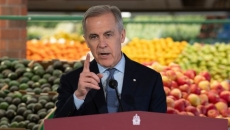
Prime Minister Mark Carney said Wednesday this action did not come as a surprise and was something the U.S. had been planning and publicly discussing for months.
Following release of the U.S. report, the prime minister said while Canada already has some strong measures, the Liberal government will introduce new legislation to step up the fight against forced labour.
"We don't want any element of forced labour coming in, goods and services, and we want to use our influence to eliminate this practice of forced labour and child labour," Carney said in brief remarks to reporters.
Conservative MP Adam Chambers said the information parliamentarians receive from the federal government about enforcement has been "completely underwhelming" and the tariff threat at least highlights the issue.
"If you look at the number of shipments that have been stopped in Canada for forced labour versus the United States as an example, clearly the current laws are not working in the way that they should," Chambers said.
"The prime minister and government's rhetoric does not match the results."
What could the USTR report lead to?
Goncalves said problems with forced labour in supply chains for commodities such as seafood, coffee, cotton and textiles have been well known for a long time, and those commodities could end up hit by tariffs.
She said businesses that import shouldn't wait for tariffs to be announced.
She suggested they start documenting their processes for sourcing their own goods — and to expect sudden surprise requests from the Canada Border Services Agency for information about forced labour.
The forced labour tariffs would require further public consultation before implementation.
Greer is scheduled to hold hearings on the tariffs in July.
Picture Courtesy: AP Photo/Mark Schiefelbein