Thursday, May 14, 2026
ADVT 
National

Timeline of B.C.'s three-year drug decriminalization pilot project

Darpan News Desk The Canadian Press, 15 Jan, 2026 09:49 AM
  • Timeline of B.C.'s three-year drug decriminalization pilot project

British Columbia's three-year pilot project that decriminalized the possession of small amounts of illicit drugs for personal use is set to end on Jan. 31. 

Health Minister Josie Osbourne has announced B.C. will not be extending the program. Here are some of the key moments in its history.

May 31, 2022

Health Canada grants the B.C. government's request for an exemption from s. 56 of the federal Controlled Drugs and Substances Act.

Jan. 31, 2023

The three-year exemption is implemented in B.C. The change decriminalizes the personal possession of up to 2.5 grams cumulatively of opioids, crack and powdered cocaine, methamphetamine and MDMA for adults. Possession continues to be prohibited around schools, childcare facilities, airports and during the operation of motor vehicles.

Nov. 8, 2023

The Restricting Public Consumption of Illegal Substances Act receives Royal Assent in the B.C. legislature. The bill prohibits consumption of illegal substances in public spaces and authorizes police to seize them and/or direct people to stop. Three days later, the Harm Reduction Nurses Association asks B.C. Supreme Court to declare Bill 34 unconstitutional. The court later grants a temporary injunction, preventing the bill from going into effect.

Jan. 31, 2024

Mental Health and Addictions Minister Jennifer Whiteside releases a statement marking the one-year anniversary of decriminalization, saying ending the project won't save "a single life."

May 7, 2024

Health Canada grants an amendment that curtails B.C.'s exemption. Decriminalization is restricted to possession in private homes and places where homeless people are legally sheltering, as well as overdose prevention, drug checking and supervised consumption sites and health-care clinics providing outpatient addiction services.

Jan. 6, 2026

When asked about extending B.C.'s exemption that allows for decriminalization, Premier David Eby says the province is "not going back to the old policy of decriminalized public drug use in British Columbia." He says "it didn't work and we ended that."

Jan. 14, 2026

Health Minister Josie Osborne announces the province will not seek an extension of its exemption agreement with Health Canada. Osborne says the goal of the pilot project was to make it easier for people to come forward and seek help, but it "hasn't delivered the results" officials hoped for.

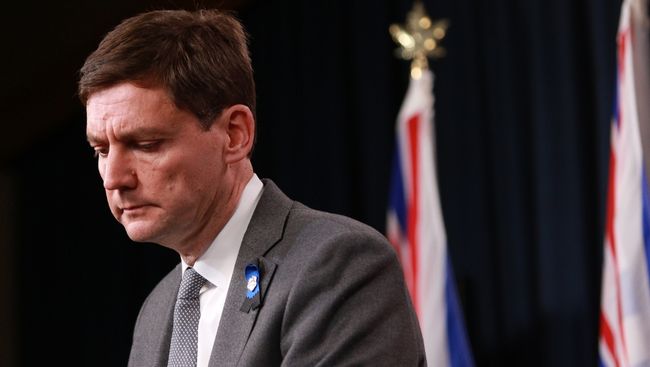
Picture Courtesy: THE CANADIAN PRESS/Chad Hipolito


MORE National ARTICLES

RCMP arrest suspects in shooting in Penticton, B.C.

RCMP arrest suspects in shooting in Penticton, B.C.
Mounties in Penticton say they've arrested the final two suspects in a shooting in the city earlier this month. No one was hurt in the shooting and police say one suspect was taken into custody immediately after the incident on March 6, but two other people escaped. 

RCMP arrest suspects in shooting in Penticton, B.C.

B.C. overdose deaths drop 30 per cent, but researchers point to 'emerging dangers'

B.C. overdose deaths drop 30 per cent, but researchers point to 'emerging dangers'
BC Coroners Service data show nearly half the people who died in January due to unregulated toxic drugs had the depressant bromazolam in their system, which researchers say highlights "emerging dangers" in the illicit drug supply even as deaths decline. The coroners service said Friday that 152 people died of toxic drug overdoses in January, marking four consecutive months that the toll was under 160.

B.C. overdose deaths drop 30 per cent, but researchers point to 'emerging dangers'

Reaction to Mark Carney being sworn in as prime minister

Reaction to Mark Carney being sworn in as prime minister
Mark Carney has been sworn in as Canada's new prime minister, succeeding Justin Trudeau. Here's how some leaders and politicians are reacting to his appointment.

Reaction to Mark Carney being sworn in as prime minister

Eby announces ending of provincial carbon tax, after Carney kills federal version

Eby announces ending of provincial carbon tax, after Carney kills federal version
Premier David Eby said at a news conference in Surrey that legislation is being prepared to repeal the consumer carbon tax during the current legislative session, with sittings scheduled to resume on March 31.

Eby announces ending of provincial carbon tax, after Carney kills federal version

Prime Minister Mark Carney's government terminates consumer carbon price

Prime Minister Mark Carney's government terminates consumer carbon price
Prime Minister Mark Carney's first move after taking office on Friday was to eliminate the consumer carbon price, undoing Justin Trudeau's signature climate policy. Carney addressed members of the media after the Friday afternoon cabinet meeting, saying the government is "focused on action."

Prime Minister Mark Carney's government terminates consumer carbon price

Canada’s International Student Cap: Universities Struggle, International Students Suffer 


Canada’s International Student Cap: Universities Struggle, International Students Suffer 

The recent cap on international student admissions in Canada has sent ripples through universities nationwide, disrupting enrollment patterns, financial planning, and student experiences. For institutions that have had student populations woven with a multicultural fabric for years, the impact has brought about significant challenges spanning across multiple areas.

Canada’s International Student Cap: Universities Struggle, International Students Suffer