Thursday, May 14, 2026
ADVT 
National

Timeline of B.C.'s three-year drug decriminalization pilot project

Darpan News Desk The Canadian Press, 15 Jan, 2026 09:49 AM
  • Timeline of B.C.'s three-year drug decriminalization pilot project

British Columbia's three-year pilot project that decriminalized the possession of small amounts of illicit drugs for personal use is set to end on Jan. 31. 

Health Minister Josie Osbourne has announced B.C. will not be extending the program. Here are some of the key moments in its history.

May 31, 2022

Health Canada grants the B.C. government's request for an exemption from s. 56 of the federal Controlled Drugs and Substances Act.

Jan. 31, 2023

The three-year exemption is implemented in B.C. The change decriminalizes the personal possession of up to 2.5 grams cumulatively of opioids, crack and powdered cocaine, methamphetamine and MDMA for adults. Possession continues to be prohibited around schools, childcare facilities, airports and during the operation of motor vehicles.

Nov. 8, 2023

The Restricting Public Consumption of Illegal Substances Act receives Royal Assent in the B.C. legislature. The bill prohibits consumption of illegal substances in public spaces and authorizes police to seize them and/or direct people to stop. Three days later, the Harm Reduction Nurses Association asks B.C. Supreme Court to declare Bill 34 unconstitutional. The court later grants a temporary injunction, preventing the bill from going into effect.

Jan. 31, 2024

Mental Health and Addictions Minister Jennifer Whiteside releases a statement marking the one-year anniversary of decriminalization, saying ending the project won't save "a single life."

May 7, 2024

Health Canada grants an amendment that curtails B.C.'s exemption. Decriminalization is restricted to possession in private homes and places where homeless people are legally sheltering, as well as overdose prevention, drug checking and supervised consumption sites and health-care clinics providing outpatient addiction services.

Jan. 6, 2026

When asked about extending B.C.'s exemption that allows for decriminalization, Premier David Eby says the province is "not going back to the old policy of decriminalized public drug use in British Columbia." He says "it didn't work and we ended that."

Jan. 14, 2026

Health Minister Josie Osborne announces the province will not seek an extension of its exemption agreement with Health Canada. Osborne says the goal of the pilot project was to make it easier for people to come forward and seek help, but it "hasn't delivered the results" officials hoped for.

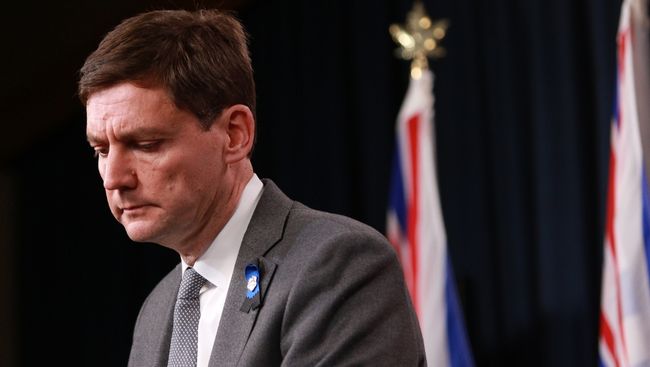
Picture Courtesy: THE CANADIAN PRESS/Chad Hipolito


MORE National ARTICLES

Is Diversity, Equity, and Inclusion at Risk? Navigating the Future of DEI in Canada 

Is Diversity, Equity, and Inclusion at Risk? Navigating the Future of DEI in Canada 
As corporate cutbacks and shifting public sentiment create uncertainty, many are asking: Is the momentum behind workplace diversity fading? Experts in workplace diversity and Canadian policy argue that, rather than disappearing, DEI is evolving, and its long-term sustainability will depend on how organizations choose to embed it into their core values. 

Is Diversity, Equity, and Inclusion at Risk? Navigating the Future of DEI in Canada 

How to Avoid Overscheduling Your Child and Why This Is Important 

How to Avoid Overscheduling Your Child and Why This Is Important 
When we look at how to avoid overscheduling our kids, we should take the time to self-reflect. Our kids are not extensions of our hopes and dreams; they are their own people, and by separating their identity from our own, we can give them a chance to be who they want to be as opposed to who we think they should be.  Some helpful reminders on how to step away from overscheduling your child: 

How to Avoid Overscheduling Your Child and Why This Is Important 

Darpan 10: Harjinder Singh Sidhu Chief Constable - Delta Police Department  

Darpan 10: Harjinder Singh Sidhu Chief Constable - Delta Police Department  
Meet the first South Asian Chief Constable of the Delta Police Department, Mr. Harjinder Sidhu. Find out more about his new role and his plan to tackle crime South of the Fraser.

Darpan 10: Harjinder Singh Sidhu Chief Constable - Delta Police Department  

Woman dies after being found unresponsive on Blackcomb Mountain in B.C.

Woman dies after being found unresponsive on Blackcomb Mountain in B.C.
A woman has died after being found unresponsive on a mountain at a British Columbia ski resort. Police say a person riding the gondola at Whistler Blackcomb spotted the woman on Blackcomb Mountain, and patrollers contacted police at about 10 a.m. on Thursday after locating her.

Woman dies after being found unresponsive on Blackcomb Mountain in B.C.

B.C.'s Kwantlen university to lay off 70 faculty due to $49 million revenue loss

B.C.'s Kwantlen university to lay off 70 faculty due to $49 million revenue loss
About 70 faculty members at Kwantlen Polytechnic University in Metro Vancouver will receive lay-off notices Friday after a "sharp decline" in international students resulted in a revenue loss of about $49 million. Laurie Clancy, vice-president of human resources at the university, says the decision is "sad and unfortunate" because they have a wonderful faculty.

B.C.'s Kwantlen university to lay off 70 faculty due to $49 million revenue loss

Rare unanimous support for B.C. bill on perinatal, postnatal mental health care

Rare unanimous support for B.C. bill on perinatal, postnatal mental health care
The Opposition B.C. Conservatives say the proposal by caucus chair Jody Toor is the first private member’s bill to pass second reading with unanimous support in a recorded vote in 43 years.

Rare unanimous support for B.C. bill on perinatal, postnatal mental health care