
Thursday, June 11, 2026
ADVT 
National

TransLink launching second round of public feedback for Burnaby Mountain Gondola

Darpan News Desk Translink, 23 Nov, 2020 09:32 PM
  • TransLink launching second round of public feedback for Burnaby Mountain Gondola

TransLink is moving to a second round of engagement for the proposed Burnaby Mountain Gondola. Incorporating feedback from the first round of public and stakeholder engagement, TransLink undertook an evaluation of three proposed routes based on project benefits, costs, and implementation considerations.

This round of engagement seeks public feedback on the evaluation and level of support for each of the three proposed routes, which will ultimately lead to a single preferred route.

TransLink will share the engagement results and a technical assessment with the City of Burnaby, the TransLink Board and Mayors’ Council. The Burnaby Mountain Gondola would provide fast, frequent, and reliable service between the SkyTrain and Burnaby Mountain. This engagement process will form part of the project’s overall business plan, which is required for any funding or approval.

Route options:

Route 1 is a straight-line route from Production Way–University SkyTrain Station to SFU Burnaby campus.

Route 2 is the eastern route from Production Way–University SkyTrain Station with the gondola travelling along Gaglardi Way, changing direction at an angle station, and continuing to SFU Burnaby campus with the terminal near the bus exchange.

Route 3 is the western route from Lake City Way SkyTrain Station to SFU Burnaby campus, which would cross the Burnaby Mountain Golf Course, change direction at an angle station, and continue to SFU Burnaby Campus with the terminal located south of South Campus Road.

“With more than 13,000 responses in our first round of engagement, we have a good sense of what the public values about the proposed gondola,” said Project Director Jeffrey Busby. “We used that feedback in our design considerations and extensive evaluation of the routes, assessing what matters to local neighbourhoods and the broader public in Metro Vancouver, and we’re ready to share that next level of work.”

Public engagement is a key component of rapid transit planning. This round of online engagement will run from November 23 to December 14, 2020. 

Photo courtesy of iStock. 
MORE National ARTICLES

Ferries, orchestra retract layoffs, await subsidy

Vancouver Symphony Orchestra and BC Ferries have rescinded lay-off notices in anticipation of receiving the Canadian government's emergency wage subsidies. Both BC Ferries and the symphony had planned layoffs to take effect on the Easter weekend as the COVID-19 pandemic drains away their businesses.

Ferries, orchestra retract layoffs, await subsidy

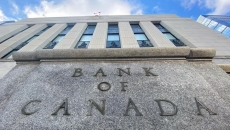
The Bank of Canada announced that it is holding its interest rate target at 0.25 per cent

The Bank of Canada announced that it is holding its interest rate target at 0.25 per cent
The Bank of Canada is warning that the downturn tied to COVID-19 will be the worst on record and that the economic recovery will depend on the effectiveness of current measures to bring the pandemic under control. The bank announced that it is keeping its key interest rate target on hold at 0.25 per cent, saying that it is effectively as low as it can go to combat the economic impacts of COVID-19.

The Bank of Canada announced that it is holding its interest rate target at 0.25 per cent

Liberals ease access to emergency COVID-19 benefit, plan to top-up wages

The federal government is making changes to its COVID-19 programs to send emergency aid to seasonal workers without jobs and those whose hours have been drastically cut but who still have some income. The changes will also allow people who are making up to $1,000 a month to qualify for the Canada Emergency Response Benefit, as well as those whose employment insurance benefits have run out since the start of the calendar year.    

Liberals ease access to emergency COVID-19 benefit, plan to top-up wages

Canada focused on fighting COVID-19 Trudeau steers clear of WHO controversy

Prime Minister Justin Trudeau refused Wednesday to join the escalating global debate about the World Health Organization's handling of the COVID-19 crisis, insisting Canada remains focused on working with experts around the world to combat the pandemic. Trudeau repeatedly batted back questions about Donald Trump's plan to halt funding to the UN agency and review what the U.S. president says was a failure to properly assess the threat posed by the novel coronavirus back in January.

Canada focused on fighting COVID-19 Trudeau steers clear of WHO controversy

With strong control measures, the federal public health agency projects that 11,000 to 22,000 Canadians could die of COVID-19 in the coming months

Canada could see the end of the first wave of the COVID-19 epidemic before autumn, according to federal projections, but only if strong physical distancing measures are strictly maintained the whole time. Even in that best-case scenario, the federal public health agency projects that a total of 4,400 to 44,000 Canadians could die of COVID-19 in the coming months.    

With strong control measures, the federal public health agency projects that 11,000 to 22,000 Canadians could die of COVID-19 in the coming months

Canada lost more than a million jobs in March, but April may be even worse

The Canadian economy lost an unprecedented one million jobs in March — the worst recorded single-month change — as the COVID-19 crisis began to take hold, lifting the unemployment rate to 7.8 per cent, Statistics Canada reported Thursday. The loss is eight times worse than the previous one-month record, yet economists warned it will likely be even worse in April, when the impact of physical distancing practices and other measures became clearer and millions of Canadians began receiving emergency federal aid.

Canada lost more than a million jobs in March, but April may be even worse