The United States has suddenly called a tariff truce with Canada, lifting its 10 per cent aluminum levy Tuesday just hours before Ottawa was to unleash a suite of countermeasures.
The tariffs on Canadian aluminum will be lifted retroactive to Sept. 1 because Canadian exports are expected to "normalize" over the remainder of the year, the U.S. trade representative's office said in a statement.
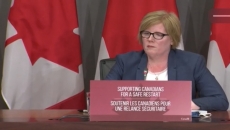
The news came as Deputy Prime Minister Chrystia Freeland and International Trade Minister Mary Ng prepared to unveil a list of U.S. aluminum products and manufactured goods Canada had singled out for reciprocal treatment later Tuesday.
Average monthly imports from Canada are expected to decline by 50 per cent from the levels they reached in the first six months of the year, the USTR said.
"Based on these expectations, the United States will resume duty-free treatment of non-alloyed, unwrought aluminum retrospective to Sept. 1, 2020," and the next four months will be closely monitored.
"If actual shipments exceeded 105 per cent of the expected volume for any month during the four-month period, then the United States will impose the 10 per cent tariff retroactively on all shipments made in that month."
Both sides in the dispute had been negotiating for months, and there had been rumblings of a resolution, said Dan Ujczo, a trade lawyer with the Ohio firm Dickinson Wright who specializes in the Canada-U.S. corridor.
A gradual resumption of manufacturing in the U.S., which ground to a halt at the outset of the COVID-19 pandemic, likely helped ease the pressure.
"I think it's a combination of the threat of countermeasures and the facts on the ground as the purported surge was dropping, based on the economic recovery," Ujczo said.
Canadian aluminum producers have been complaining for weeks that what the U.S. saw as a "surge" was in fact the unavoidable byproduct of emergency measures.
With automakers forced to idle their production lines, demand for specialty value-added aluminum products from north of the border began drying up in March.
Smelters, unable to simply shut down and ride out the storm, instead shifted to producing the same generic, unwrought metal as producers in the U.S., triggering alarm bells and eliciting the wrath of the USTR.
U.S. negotiators have long tried to impose quotas on exporters of Canadian metal, an effort that officials on the Canadian side of the table have strenuously opposed.
The terms of the detente reached Tuesday don't extend into quota territory, Ujczo said.
"I mean, there's certainly thresholds, but I don't think these operate as a limit to completely constrain the industry," he said. "These allow for growth within the industry based on market principles."
The White House had also been under recent pressure to rethink the tariffs.
The governors of New Hampshire, Maine and Vermont wrote to President Donald Trump last week in hopes of convincing him to stop what they called "unnecessary and inappropriate" measures sure to have "negative consequences" for consumers and suppliers in the United States.
"New England and Canada build things together," they wrote. "The rising costs will add to the challenges already facing most business sectors during these challenging times caused by the COVID-19 pandemic."
The U.S. imposed the tariffs last month at the request of two American manufacturers, prompting an outcry not only from Canadian producers, but from the bulk of aluminum producers in the U.S. as well.
The federal Liberal government had already issued a list of products it might have targeted for retaliation, including beverage cans, washing machines and golf clubs.