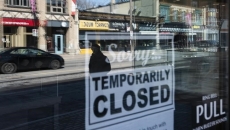
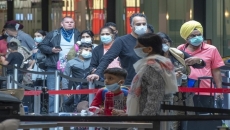
Growing COVID-19 case numbers from variants of concern in British Columbia could dash the province's hopes for indoor religious services or any other return to normal life in the near future, experts say.
Sally Otto, a University of British Columbia professor who has done COVID-19 modelling, said cases of the variant first detected in the United Kingdom have doubled nearly every week since the beginning of February.
Just looking at the past four weeks, she pointed out there were 81 cases of the variant on Feb. 22, 137 on March 1, 363 on March 8, and 818 on Monday. The number of cases grew to 921 on Tuesday.
"What we're doing is not enough to stop the spread of the new variant — nowhere close, it's doubling so fast," Otto said. "It's just a couple more weeks of doubling before we see a spike in cases in the province.
"I don't know what they'll have to do in order to bend that curve down, but I predict more indoor restrictions."
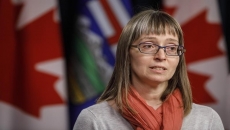
Provincial health officer Dr. Bonnie Henry said Monday that she has received advice from an expert panel and will soon allow small outdoor religious services, including at Easter and Passover. The province is also working on a phased reopening of indoor services.
She said she is "hopeful" that indoor services will resume in mid-April, but the timelines are flexible based on transmission levels and the advice of the panel led by Robert Daum, an adjunct professor of religious studies at UBC.
Henry has also said sports could return in the coming weeks. She has already announced that groups of up to 10 people can gather outside, as long as people who are not from the same household remain physically distanced.
The loosening of restrictions comes as the seven-day average of COVID-19 cases in B.C. stands at 543, an increase from 408 a month ago on Feb. 17. The province is also in the early stages of vaccinating its general population, with people over 90 and Indigenous people over 65 getting their shots this week.
At the same time, Ontario has declared a third wave as variants of concern drive pandemic growth in the province.
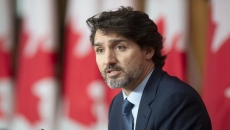
B.C. Premier John Horgan said Wednesday that the province's vaccination program is in a good place and it has been accelerating stages as more supply becomes available.
But the persistent caseload of about 500 to 550 per day is "disconcerting," hospitalizations are creeping up and the province is concerned about the growing numbers of variants, he said.
"As we start to vaccinate more, we'll see a reduction in caseloads and hopefully a reduction in hospitalizations as well," he said.
He said B.C. is not in the same place as Ontario, which is still in the grips of winter while the West Coast is starting to enjoy spring temperatures.
"We know that during the spring break, people are going to want to get outdoors. Why not? We also know that young people, particularly, want to be with their peers," Horgan said.
Gatherings between kids who already have contact with one another during school or extracurricular activities can be managed safely, he said, adding that meeting outdoors is good for people's mental health.
Otto said allowing outdoor gatherings of up to 10 people might be a "risk worth taking" while the vaccine rollout continues, given that the possibility of transmission outside is low, as long as people wear masks and avoid crowds.
She also said she hasn't heard of any super-spreader events linked to outdoor sports.
However, Otto said she doubts that indoor religious services will return in the coming weeks.
She predicted that the variants would drive a spike in cases and hospitalizations in two weeks, with only a moderate rise in deaths because the oldest members of B.C.'s population will have been vaccinated.
"My sense is that religious leaders would not want to risk large indoor gatherings during a time of a spiking number of cases," she said.
Vaccines are effective against the variant first identified in the U.K., which is the strain of most concern in B.C. right now, she added.
Horacio Bach, a UBC infectious disease expert, said he would prefer if the provincial government held a pilot project involving outdoor religious services and conducted a review before giving the green light to all religious institutions to go ahead.
Some Orthodox Jewish congregations have been allowed to hold outdoor services because their faith prevents them from using technology to connect with one another on the Sabbath, but the province has not treated the services as a pilot project.
Bach said outdoor gatherings can be held safely, but there are risks that people will not be as vigilant as they should be. People at a barbecue might all congregate around an area where there is food, take their masks off while eating and talking, and wind up going inside the house to use the bathroom, he noted.
There are always going to be some people who don't follow the rules, but more broadly, B.C. residents might be getting the wrong impression that restrictions are being eased because there's less of a threat and they don't need to be that careful anymore, Bach said.
"The point will be: How responsible will people be?" he asked.
The Ministry of Health said in a statement that decisions related to public health orders, guidelines, and restrictions are made based on the best available science and data and are made with public health and safety at the forefront.
Jamie Scott, a professor emerita of health sciences at Simon Fraser University, urged people to wear their masks outdoors at all times, even while walking down the sidewalk and especially while gathering with people who aren't in their household.
Even though the risk of transmission outdoors is much lower than indoors, talking and breathing still create aerosol that could cause infection, she said.
Scott lives in California, where she said for the most part, it's thought to be inconsiderate not to wear a mask outdoors, even when going for a jog.
"It just needs to become part of your daily activity," she said.