Thursday, June 11, 2026
ADVT 
National

COVID-19 deaths hit racialized communities hardest: Stats Can

Darpan News Desk The Canadian Press, 28 Oct, 2020 10:07 PM
  • COVID-19 deaths hit racialized communities hardest: Stats Can

A new Statistics Canada report says communities with the most visible minorities had the highest mortality rates during the first wave of the novel coronavirus.

The report's authors say it is more evidence that the pandemic is disproportionately affecting visible minorities, who are more likely to live in overcrowded housing and work in jobs that put them more at risk of exposure to COVID-19.

Other studies have shown visible minorities are more likely to suffer from conditions such as diabetes and high blood pressure, which are considered to make an individual at higher risk for serious illness or death from COVID-19.

In the four biggest provinces — which account for 99 per cent of the deaths from COVID-19 between March and July — death rates from COVID-19 were twice as high in communities where more than one in four people identify as a visible minority, compared with communities where less than one per cent of residents did.

The death rates are adjusted for age to account for different age structures in different neighbourhoods.

It found in communities where less than one per cent of the population identified as a visible minority, the death in the first wave was 16.9 for every 100,000 people. In communities with a visible minority population between 10 and 25 per cent, the death rate was 27.3 and for communities with visible minority populations of more than 25 per cent, the death rate was 34.5.

In Ontario and Quebec, the rates were 3.5 times as high in communities where more than one-fourth of residents identify as visible minorities.

Nearly 8,800 people died in the first wave of the pandemic in Canada, 94 per cent of them in Quebec and Ontario.

Canadian and provincial public health agencies do not collect much data on the race of patients with COVID-19, so Statistics Canada used the national database on deaths and census data on visible minorities and neighbourhoods to compile the report.

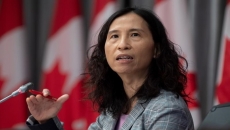
Chief public health officer Dr. Theresa Tam, who said early in the pandemic there were no plans to collect race-based data on cases of COVID-19, said Wednesday that finding out who is most affected by an illness like COVID-19 can help drive policy decisions about where to direct resources.

"So under those circumstances, doubling efforts to focus on providing support, whether it's lab testing, or anything else in those communities, I think would be extremely important," she said.


MORE National ARTICLES

The federal government has made another multimillion-dollar investment into the development of the F-35 stealth fighter despite no guarantee it will buy the aircraft.

The federal government has made another multimillion-dollar investment into the development of the F-35 stealth fighter despite no guarantee it will buy the aircraft.
The federal government has extended the $19-billion competition to replace Canada's aging CF-18s by another month because of COVID-19 — one week after it made another multimillion-dollar investment into the development of the F-35 stealth fighter jet.

The federal government has made another multimillion-dollar investment into the development of the F-35 stealth fighter despite no guarantee it will buy the aircraft.

B.C. to hold consultations on the 2021 budget but all gatherings will be virtual

B.C. to hold consultations on the 2021 budget but all gatherings will be virtual
British Columbia's all-party legislative committee will hold public consultations on the upcoming provincial budget despite restrictions by the COVID-19 pandemic. The Select Standing Committee on Finance and Government Services says in a statement the consultation process for the 2021 budget will get underway June 1.    

B.C. to hold consultations on the 2021 budget but all gatherings will be virtual

A quick look at British Columbia's COVID-19 reopening plan

A quick look at British Columbia's COVID-19 reopening plan
The B.C. government has outlined its plan to reopen the BC economy Mid May during the COVID-19 pandemic under guidelines aimed at controlling the spread of the virus. 

A quick look at British Columbia's COVID-19 reopening plan

Vancouver Police make substantial drugs & weapons seizure

Vancouver Police make substantial drugs & weapons seizure
Vancouver Police have seized nearly $3 million worth of street drugs and eight handguns after a four-month investigation into the flow of illicit opioids into Metro Vancouver. Early in 2020, the VPD’s Organized Crime Section launched Project Transit to target offenders engaged in the distribution of illegal opioids.           

Vancouver Police make substantial drugs & weapons seizure

No school-made gifts for mom this year. Dads, get to work

No school-made gifts for mom this year. Dads, get to work
At first, the Facebook meme made me laugh: “What are dads going to do when they realize their kids aren’t bringing home any Mother’s Day gifts from school?” Then it hit me: What AM I going to do?! This Mother’s Day, of course, is different.

No school-made gifts for mom this year. Dads, get to work

Canada to do millionth COVID-19 test but numbers still falling short

Canada to do millionth COVID-19 test but numbers still falling short
Canada is on track to complete its millionth test for COVID-19 sometime in the next 24 hours even as the country's biggest province continues to struggle to hit its own testing target. Dr. Theresa Tam, the chief public health officer of Canada, reported that as of Wednesday morning, more than 970,000 tests had been completed nationwide since the start of the COVID-19 pandemic in Canada.    

Canada to do millionth COVID-19 test but numbers still falling short