Thursday, July 2, 2026
ADVT 
National

Fact File: Posts falsely claim Canada revoked China's equal trade status

Darpan News Desk The Canadian Press, 11 Dec, 2025 11:52 AM
  • Fact File: Posts falsely claim Canada revoked China's equal trade status

Chinese language posts that appeared on social media the past few weeks claimed Canada was one of 32 countries to revoke China's "most favoured nation" trade status on Dec. 1. 


The claim originates from a 2021 rumour that conflates most favoured nation status with "generalized system of preference" certificates, which China stopped issuing to Canada and other countries on Dec. 1 that year. 


China remains a most favoured nation by Canada, meaning it is entitled to equal treatment as a trading partner.


THE CLAIM


Since November, several Chinese language posts across western social media claimed Canada was one of 32 countries to revoke China's "most favoured nation" status. 


Most favoured nation refers to a trade principle that entitles trading partners to equal status. Countries that trade as World Trade Organization members are required to provide the same trade benefits to all countries, with some exceptions. 


An image posted to the X platform, formerly Twitter, and multiple times on Facebook claimed Canada is one of 32 countries that removed China's most favoured nation trade status as of Dec. 1.
Similar claims appeared several times on Threads, as well as YouTube. 


THE FACTS


A keyword search of the Chinese language text shows this isn't the first time the claim appeared online. 


In 2021, Hong Kong-based HKBU Fact Check reported on the claim, which seemingly originated from a Facebook post. The post made an identical claim about 32 countries removing China's most favoured nation status on Dec. 1. 


However, a further keyword search shows the original announcement made by the General Administration of Customs China that references the 32 countries.


In the announcement, the customs agency said it would stop issuing generalized system of preference (GSP) certificate of origins for goods exported to 32 countries, including Canada and the European Union. 


The certificates grant preferential tariffs to imports from developing countries, according to the World Trade Organization. 


The Chinese customs agency said some countries pulled their GSP treatment for China over the years, since rapid economic development meant China was no longer considered a low-income country. The agency said it would stop issuing GSP certificates of origin to the 32 countries on Dec. 1. 


A 2021 article from China Briefing discussed the confusion over the announcement, noting the 32 countries stopped giving China GSP status over several years and not all at once. Canada removed its version of the GSP for China and 71 other countries as of Jan. 1, 2015. 


China and Canada are both part of the World Trade Organization, and remain entitled to most favoured nation status. China remains on Canada's list of countries afforded that status. 


Canada removed most favoured nation status from Russia and Belarus on March 2, 2022 in response to the Russian invasion of Ukraine, and imposed a general tariff of 35 per cent to most goods.

However, it made an exception for cobalt-60, a radioactive isotope used in some medical goods, as the government said it was unable to source enough elsewhere. 

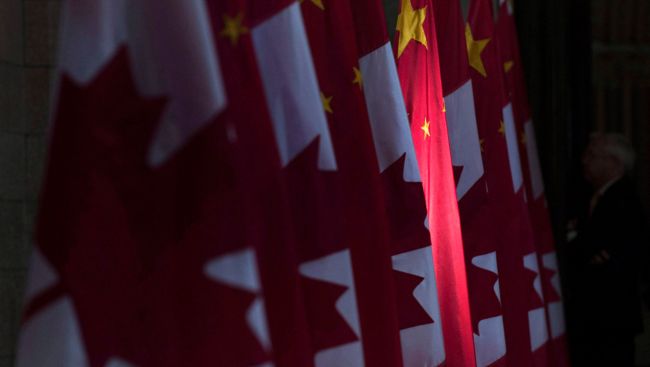
Picture Courtesy: THE CANADIAN PRESS/Adrian Wyld

MORE National ARTICLES

Jump in number of respiratory cases at B.C. Children's Hospital emergency room

Jump in number of respiratory cases at B.C. Children's Hospital emergency room
British Columbia's Children's Hospital says it's seen a steady rise in the number of children coming in with respiratory symptoms. The hospital says in a statement that about 44 per cent of total visits from children to the emergency department involve respiratory illness. 

Jump in number of respiratory cases at B.C. Children's Hospital emergency room

Vancouver heritage building being demolished over risk of collapse

Vancouver heritage building being demolished over risk of collapse
The building at 500 Dunsmuir St., commonly known as Dunsmuir House, was built in 1909 initially as a hotel. It has also served as barracks for sailors in the Second World War, a Salvation Army home for veterans and later social housing, but has been empty since 2013.

Vancouver heritage building being demolished over risk of collapse

Killer on parole is arrested in B.C. over threats made when his points card failed

Killer on parole is arrested in B.C. over threats made when his points card failed
Police in Vancouver say they've arrested a 66-year-old man for uttering threats against a gas station clerk and only later learned the suspect was a convicted murderer out on parole from a life sentence. They say the alleged threat was made to the attendant on Saturday when the man's points card wouldn't work. 

Killer on parole is arrested in B.C. over threats made when his points card failed

Three children sent to hospital after being hit by vehicle in southern Alberta

Three children sent to hospital after being hit by vehicle in southern Alberta
Police in southern Alberta are investigating after three children were struck by a vehicle. Officers responded to a call after the children — ages 14, seven and five — were hit in a marked crosswalk in Lethbridge, Alta.

Three children sent to hospital after being hit by vehicle in southern Alberta

Finnish developer pitches 250-room floating hotel for Vancouver harbour

Finnish developer pitches 250-room floating hotel for Vancouver harbour
A Finnish developer wants to bring a 250-room floating hotel into Vancouver's harbour. A statement from Sunborn International Holding says the proposed hotel would be 136 metres long and 19.5 metres high, spread out over six floors and connected to the Vancouver Convention Centre by a ramp from the seawall walkway.

Finnish developer pitches 250-room floating hotel for Vancouver harbour

B.C. launches short-term rental registry with annual fees to rein in 'speculators'

B.C. launches short-term rental registry with annual fees to rein in 'speculators'
Housing Minister Ravi Kahlon says B.C. is launching a registry for short-term rentals to further crack down on "speculators" operating illegally. Kahlon says all short-term rental operators on platforms such as Airbnb and Vrbo must apply for a registration number to be displayed on all online listings by May 1, and hosts who fail to comply will have their listings taken down from June 1. 

B.C. launches short-term rental registry with annual fees to rein in 'speculators'