Thursday, July 2, 2026
ADVT 
National

Fact File: Posts falsely claim Canada revoked China's equal trade status

Darpan News Desk The Canadian Press, 11 Dec, 2025 11:52 AM
  • Fact File: Posts falsely claim Canada revoked China's equal trade status

Chinese language posts that appeared on social media the past few weeks claimed Canada was one of 32 countries to revoke China's "most favoured nation" trade status on Dec. 1. 


The claim originates from a 2021 rumour that conflates most favoured nation status with "generalized system of preference" certificates, which China stopped issuing to Canada and other countries on Dec. 1 that year. 


China remains a most favoured nation by Canada, meaning it is entitled to equal treatment as a trading partner.


THE CLAIM


Since November, several Chinese language posts across western social media claimed Canada was one of 32 countries to revoke China's "most favoured nation" status. 


Most favoured nation refers to a trade principle that entitles trading partners to equal status. Countries that trade as World Trade Organization members are required to provide the same trade benefits to all countries, with some exceptions. 


An image posted to the X platform, formerly Twitter, and multiple times on Facebook claimed Canada is one of 32 countries that removed China's most favoured nation trade status as of Dec. 1.
Similar claims appeared several times on Threads, as well as YouTube. 


THE FACTS


A keyword search of the Chinese language text shows this isn't the first time the claim appeared online. 


In 2021, Hong Kong-based HKBU Fact Check reported on the claim, which seemingly originated from a Facebook post. The post made an identical claim about 32 countries removing China's most favoured nation status on Dec. 1. 


However, a further keyword search shows the original announcement made by the General Administration of Customs China that references the 32 countries.


In the announcement, the customs agency said it would stop issuing generalized system of preference (GSP) certificate of origins for goods exported to 32 countries, including Canada and the European Union. 


The certificates grant preferential tariffs to imports from developing countries, according to the World Trade Organization. 


The Chinese customs agency said some countries pulled their GSP treatment for China over the years, since rapid economic development meant China was no longer considered a low-income country. The agency said it would stop issuing GSP certificates of origin to the 32 countries on Dec. 1. 


A 2021 article from China Briefing discussed the confusion over the announcement, noting the 32 countries stopped giving China GSP status over several years and not all at once. Canada removed its version of the GSP for China and 71 other countries as of Jan. 1, 2015. 


China and Canada are both part of the World Trade Organization, and remain entitled to most favoured nation status. China remains on Canada's list of countries afforded that status. 


Canada removed most favoured nation status from Russia and Belarus on March 2, 2022 in response to the Russian invasion of Ukraine, and imposed a general tariff of 35 per cent to most goods.

However, it made an exception for cobalt-60, a radioactive isotope used in some medical goods, as the government said it was unable to source enough elsewhere. 

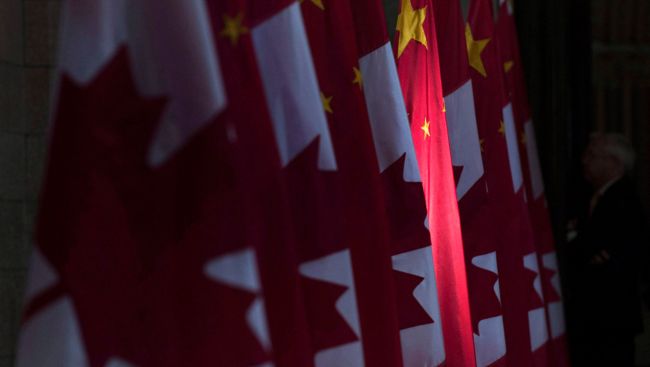
Picture Courtesy: THE CANADIAN PRESS/Adrian Wyld

MORE National ARTICLES

B.C. paramedics say staffing nears 'critical' levels, affecting response times

B.C. paramedics say staffing nears 'critical' levels, affecting response times
The union representing almost 6,000 ambulance paramedics and dispatchers in British Columbia is sounding an alarm on staffing levels "reaching critical" in the province. In a statement, the Ambulance Paramedics of British Columbia CUPE 873 says members are reporting "dozens and dozens" of empty ambulances, with "hundreds" of unfilled positions across the province. 

B.C. paramedics say staffing nears 'critical' levels, affecting response times

B.C. premier should work with U.S., not ramp up trade threats: Opposition leader

B.C. premier should work with U.S., not ramp up trade threats: Opposition leader
In a video posted on social media, John Rustad says everything possible needs to be done to stop drugs from coming into the province and address issues at the ports, and that a trade war could cost tens of thousands of jobs.

B.C. premier should work with U.S., not ramp up trade threats: Opposition leader

Boat sinks after smouldering for three hours in Indian Arm waters

Boat sinks after smouldering for three hours in Indian Arm waters
A boat was destroyed in the waters of the Indian Arm fjord near North Vancouver's Deep Cove on Saturday afternoon after it caught fire, smouldered for over three hours and sank. A spokesperson for the Pacific region of the Fisheries Department says Canadian Coast Guard were advised of the burning boat just after noon on Jan. 18 and dispatched from the Kitsilano Base.

Boat sinks after smouldering for three hours in Indian Arm waters

Canada's privacy watchdog 'concerned' about students' personal info after data breach

Canada's privacy watchdog 'concerned' about students' personal info after data breach
The federal privacy watchdog says he's "concerned" about a data breach involving a student information system used across Canada, and his office is seeking more information from the U.S.-based company behind the targeted software. Privacy commissioner Philippe Dufresne says his office is in touch with PowerSchool, which provides the affected platforms to schools across North America.

Canada's privacy watchdog 'concerned' about students' personal info after data breach

Donald Trump won't hit Canada with tariffs on his first day in office: reports

Donald Trump won't hit Canada with tariffs on his first day in office: reports
The New York Times and Wall Street Journal say incoming U.S. president Donald Trump won't slam Canada with damaging tariffs on his inauguration day. Both U.S. newspapers report Trump will instead sign an executive order today to investigate alleged unfair trade and currency practices by Canada, Mexico and China.

Donald Trump won't hit Canada with tariffs on his first day in office: reports

Indigenous leaders, barred from premiers meeting, want in on Canada-U.S. talks

Indigenous leaders, barred from premiers meeting, want in on Canada-U.S. talks
Three national Indigenous leaders say Indigenous Peoples should be at the centre of any discussions on how the country should respond to incoming U.S. president Donald Trump's threats on tariffs and Canada's territorial sovereignty. National Chief Cindy Woodhouse Nepinak, Inuit Tapiriit Kanatami President Natan Obed and Métis National Council President Victoria Pruden made that pitch during a meeting with Prime Minister Justin Trudeau on Wednesday morning.

Indigenous leaders, barred from premiers meeting, want in on Canada-U.S. talks