Do you know what’s in your skincare products? Maybe? This isn’t an alert about safety concerns around certain ingredients but rather a question of whether we truly understand what those ingredients are and their intended purpose and benefits. Just as we were getting our heads around one star ingredient such as Hyaluronic Acid—something that delivers an amazing amount of moisture to the skin—a new one arrives on the beauty scene. But is it new or just new to consumers via beauty media buzz?
“I think it is a combination of factors,” observes Dr. Tim Falla, senior vice-president, research & development at skincare brand Paula’s Choice. “There is a lot more easily accessible information available now, not only on ingredients and what they do, but also on what skin requires in different circumstances such as aging, sensitivity, acne, etc. So many traditional ingredients, and their use, are getting a resurgence, resulting in a lot more dialogue around ingredients.”
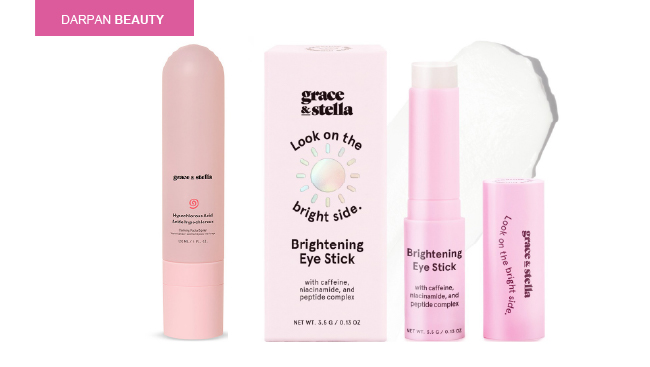
Grace & Stella’s Chief Marketing Officer, Caroline Finn, notes that while some ingredients have been studied and in use for decades—like Niacinamide or Bakuchiol—it’s only now, due to social media and more knowledgeable consumers, that there’s “mainstream awareness.” She also points to a shift to ingredient-first marketing on the product packaging for a higher profile.
“Others, like Hypochlorous Acid, are genuinely newer to skincare, having migrated from medical settings,” Finn explains. “What's changed most is that consumers are now more aware of the link between specific ingredients and specific results, and that's pushing brands like ours to be more transparent and precise about what we use and why.”
Hypochlorous Acid is a molecule that is naturally produced in the body with antimicrobial and anti-inflammatory properties. Falla describes it as “ideal for skin conditions in which bacteria and inflammation are involved, such as wound healing, acne, rosacea, and atopic dermatitis.”
Though he warns that it can be difficult to formulate with, and to ensure stability.
Finn states that Stella & Grace has had success using Hypochlorous Acid in a spray application that gently fights harmful bacteria, calms inflammation, and aids in healing the skin. “Because it’s so simple and so effective—it absolutely fits into our ethos of uncomplicated skincare,” she says.
At Paula’s Choice, Falla says that a resurgence of interest in Peptides (short chains of amino acids that have a range of roles in delivering results in skincare products) is bringing about exciting innovation with the help of AI. “All aspects of skincare can be positively impacted by specific peptide sequences that are designed for activity, solubility, synergy, etc., even before they are synthesized,” he explains.
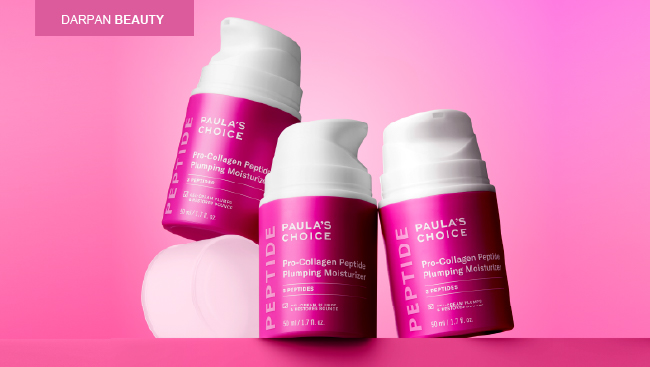
One new term in the anti-aging realm is NAD+ (nicotinamide adenine dinucleotide, oxidized). Falla defines it as a coenzyme found in every living cell which is essential for energy production, DNA repair and cellular signaling and is the foundational ingredient for Paula’s Choice CellularYouth™ Longevity Serum. “This advanced serum was developed over five years of longevity research and is clinically designed to target the 12 visible effects of aging linked to the natural loss of cellular energy,” Falla explains.
As Finn noted, Niacinamide (Vitamin B3) and Bakuchiol have been studied and incorporated in formulations for years and are only really new to consumers. Niacinamide helps to minimize pore size, fades dark spots, strengthens the skin barrier, reduces redness, and regulates oil production. Finn adds that it’s exceptionally well-tolerated across skin types. “For us, it embodies a core belief; effective and gentle aren't mutually exclusive.”
Clinical studies show Bakuchiol, a plant-derived compound from the psoralea corylifolia plant, produces comparable results to retinol, reducing fine lines, improving texture, and stimulating collagen, Finn says. And it doesn’t have the side effects of retinol, like dryness, flakiness, or sun sensitivity.
Anyone with ultra dry or sensitive skin will benefit from Ectoin, an ingredient that Falla says not only helps compromised skin but makes all skincare products work better. “It’s a small molecule first isolated from organisms that live in extreme environments in which it protects against heat, UV, lack of water and osmotic stress. It acts like a humectant, but instead of attracting water, like hyaluronic acid, it organizes water around cells and membranes to protect them. Ectoin is an excellent ingredient for hydration, barrier support and protecting against inflammation,” Falla explains.
For acne, rosacea, and hyperpigmentation, Azelaic Acid is a highly beneficial ingredient. Falla states it’s a small molecule isolated from grains and has antimicrobial and anti-inflammatory activity that improves cell turnover and combats clogged pores.
Another naturally-derived ingredient on the beauty beat is Ferulic Acid—an antioxidant also found in grains, fruits, and vegetables that neutralizes free radicals that damage skin and accelerate ageing.
“What makes it especially valuable is its synergistic effect: when combined with Vitamins C and E, it significantly boosts their stability and potency—essentially doubling their photoprotective benefit. It makes everything around it work harder, which is exactly why we use it,” Finn explains. “And it fits into the Grace & Stella vibe, for sure, as it’s a multi-tasking hero.”
As the beauty product sphere continues to expand, innovation in research and development is at the forefront for any successful producer—something that truly benefits the consumer.